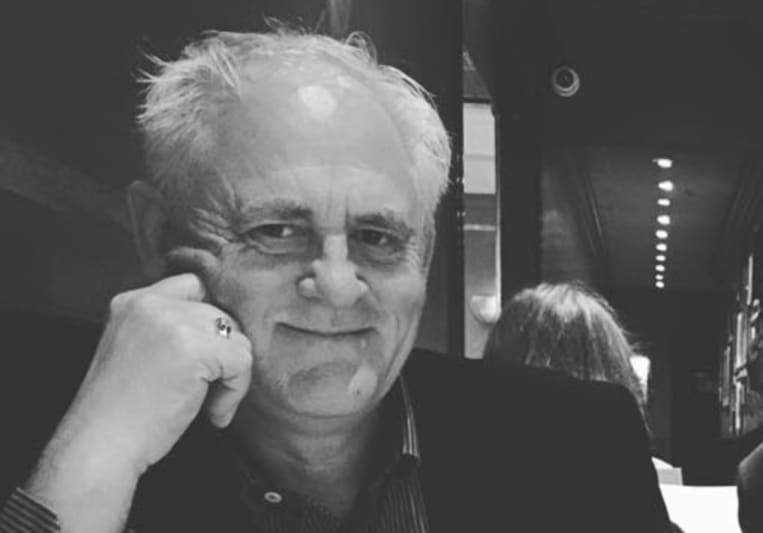
I’m a composer, sound designer, mixer, and advanced audio editor with more than 30 years of experience creating complete sonic worlds for documentary film. My Emmy-winning and Grammy-recognized work combines inspired original music with detailed sound design, editing, voice production, and mixing, all shaped through one cohesive creative vision.
For more than 30 years, I have helped documentary filmmakers tell powerful stories through music and sound. I specialize in original composition and sound design, with extensive experience delivering complete, full-service audio post-production for award-winning films and series.
• Original score and composition
• Creative sound design and atmospheric world-building
• Advanced dialogue and audio editing
• Voice recording and production
• Audio restoration and cleanup
• Foley, effects, and ambience editing
• Documentary sound supervision
• Final mixing and delivery
Working across composition, editorial, sound design, and mixing allows me to approach a film holistically. The score and soundtrack are developed together, creating a unified emotional language that supports the story and helps the film flow seamlessly from beginning to end.
My Emmy-winning and Grammy-recognized body of work includes projects created for PBS programs such as FRONTLINE and American Experience, along with documentary films, limited series, music programming, and independent productions.
Whether you need an original score, advanced audio editing, sound design, a final mix, or one trusted collaborator to oversee the complete soundtrack, I can take your project from rough cut to finished delivery.
Click the 'Contact' above to get in touch. Looking forward to hearing from you.
Credits
Discogs verified credits for Christopher Hedge- Paul Horn With Christopher Hedge
- Andy Barnett (6)
- Opafire featuring Norman Engelleitner
- Opafire
- Opafire
- William Aura
- Paul Horn
- Paul Horn
- Neil Young
- Paul Horn
- William Aura
- Rick Henderson*
- William Aura
- The Snakes In The Grass
- William Aura
- Paul Horn
- Paul Horn
- Opafire featuring Norman Engelleitner
- Opafire
- Paul Horn
- William Aura
- Opafire
- Various
- Gary Moore
- CSNY*
Interview with Christopher Hedge
Q: Tell us about a project you worked on you are especially proud of and why. What was your role?
A: I’m especially proud of Water for Life (2023), Will Parrinello’s award-winning documentary about three Indigenous leaders in Latin America defending their communities’ water rights. Narrated by Diego Luna and distributed through PBS and Amazon Prime Video, the film is now reaching audiences at festivals around the world. What matters most to me is that its message of respect for Indigenous people—and their right to protect their water—is being heard and acted upon by international leaders. I composed the original score and also handled sound design, voice restoration and editing, and the immersive surround mix. The film follows three distinct stories, and many viewers and collaborators have told me that the music helped unify those characters, landscapes and struggles into a single emotional journey. I integrated field recordings and natural environments directly into the score and collaborated with renowned artist and musician Jaron Lanier, who contributed rare instrumental textures, including a glass armonica played with water. I also mixed the film’s theme, “Ko (Agua),” written by Chilean Mapuche artist Daniela Millaleo and performed with Grammy-winning vocalist Lila Downs. In addition to mixing, I performed many other instruments and created the string arrangements. I’m proud that the soundtrack is not merely an accompaniment, it became an integral part of the film’s identity and impact.
Q: What are you working on at the moment?
A: I’m currently composing original music for a film about the history of "Vietnam Veterans Against the War" and another film exploring neurodivergence and the question, “What is normal?” I’m also creating Dolby Atmos sound design and a spatial mix for the Morrison Planetarium at the California Academy of Sciences, while scoring a one-hour documentary about a major California wine producer and artist. Together, these projects reflect the range I enjoy most: history, human experience, art, science and immersive storytelling.
Q: Is there anyone on SoundBetter you know and would recommend to your clients?
A: I’m new to SoundBetter, so I don’t yet know anyone on the platform well enough to offer a personal recommendation. I take referrals seriously and would prefer to recommend someone only after becoming familiar with their work and professional approach. I look forward to meeting other talented providers here and building a trusted network of collaborators whose strengths complement my own.
Q: Analog or digital and why?
A: I have worked extensively in both, but I choose digital because my goal is to make the entire edifice of the studio disappear in service of what I am recording. I have pursued that transparency throughout my career, even though people often describe the studio itself as my primary instrument. Digital technology gives me the freedom, precision and range to follow an idea without the machinery getting in its way. My sensibility remains distinctly analog. I value real performances, natural sources, human timing and the unpredictable character of sound moving through the world. For me, the ideal combination is analog humanity with digital freedom.
Q: What's your 'promise' to your clients?
A: My promise is to be truthful, transparent and entirely in service of the film. I approach the work from the audience’s point of view and bring a beginner’s mind to every piece, so the music can become something genuinely new rather than a repetition of past solutions. I also promise to be a joyful and cooperative member of the team, consistent, communicative and responsive throughout production. When the process becomes difficult, as creative work sometimes does, I remain present, honest and committed to finding the solution that best serves the story. This is not simply an aspiration; it reflects how directors and clients have consistently described their experience of working with me.
Q: What do you like most about your job?
A: What I love most is inventing and being surprised by what has emerged at the end of a day’s work. The most rewarding moments are when I feel I have connected with something true in a film and captured it authentically. The music reaches people not because I have tried to be clever, but because we share an emotional response to the story and I have found a way to express it. When I finish a piece and immediately want to rush out and play it for everyone, I know I have discovered something real.
Q: What questions do customers most commonly ask you? What's your answer?
A: Clients most often ask, “How much will it cost, how long will it take, and can you create the sound I’m imagining?” My answer is that those questions are connected. Once I understand where the project stands, what the music must accomplish, the deadline, deliverables and available budget, I can propose an honest and efficient path forward. I do not impose a stock solution or simply imitate a reference track. I listen for the emotional identity of the project, develop a distinctive musical approach and remain closely collaborative through the agreed revisions and final delivery.
Q: What's the biggest misconception about what you do?
A: The biggest misconception may be that my experience makes me prohibitively expensive. In reality, I am flexible and have worked across productions of every scale, including projects with no meaningful budget, when I believed deeply in the work. I have always cared more about the creative result than maximizing my compensation. Because I can compose, perform, record, sound design, edit and mix, I often fulfill roles that would otherwise require several specialists. That continuity can save time, simplify communication and keep the soundtrack creatively unified. I bring considerable value to a team, but my first concern is always finding the right creative approach for the project.
Q: What questions do you ask prospective clients?
A: I begin by asking where you are in the production process and what materials are ready for me to review. What is the timeline, and is there a firm deadline? What budget has been allocated, so I can recommend the best approach within it rather than inventing a bid without context? Most importantly, what do you care about most when you imagine the music, what should the audience feel, remember or understand? I also ask about references, intended use, required deliverables and who will provide final creative approval.
Q: What advice do you have for a customer looking to hire a provider like you?
A: Listen beyond a single demo. Search my name, ask Alexa or Siri to play by me, and spend time exploring the range of work I have created. Speak with anyone who has worked with me at any point in my career, I stand behind those relationships as much as the music itself. Most importantly, hire me for the artist I genuinely am, not as a generic producer or composer expected to imitate someone else. Know my musical voice, bring me your vision, and trust that I will be on your side. My purpose is to understand what your project needs and use everything I know to help it become fully itself.
Q: If you were on a desert island and could take just 5 pieces of gear, what would they be?
A: Zoom H3VR surround microphone. A Kalimba. AMBEO Binaural Microphone, Rycote Windshield, iPhone.
Q: What was your career path? How long have you been doing this?
A: I have played music throughout my life and have worked professionally for more than four decades. My path began in high school between 1972 and 1975, when I worked in a music store with access to a sound-on-sound tape deck. I used the store’s instruments to build complete recordings by myself, something that felt entirely new to me at the time. I continued composing, performing multiple instruments and recording independently through college. In 1984, I founded The Magic Shop Studio as an all-inclusive source for original music and recording. My work expanded into commercial and corporate projects for organizations including Apple and Oracle, followed by art, film and performance projects at European festivals. These experiences eventually led to performances for the Olympic Winter Games and the King of Bhutan, as well as a film documenting my work with Paul Horn in Italy. Documentary scoring became a major part of my career and often took me into the field alongside directors. I collected music, voices and environmental recordings in places including Paraguay, Bhutan, Borneo, Panama, Bolivia and throughout Europe. Those experiences shaped the way I work today, treating composition, performance, sound design and the sounds of the real world as parts of one musical language.
Q: How would you describe your style?
A: My style is exploratory, cinematic and difficult to place in a single category. I often combine acoustic instruments with electronics, found-sound loops, location recordings and the musical accidents that emerge along the way. Even when a piece begins in familiar territory, it usually develops an unexpected twist. I prefer to enter the process without rigid preconceptions and discover the music through listening, experimentation and performance. The finished piece often surprises me and that sense of discovery is central to my work.
Q: Which artist would you like to work with and why?
A: I don’t have a single “dream” artist, I’m an artist myself, and I’m most inspired by collaborators with a strong, inventive voice of their own. Having worked with artists including Neil Young, Paul Horn and David Grisman, I deeply appreciate musicians who remain dedicated to their craft and unmistakably themselves. I would welcome any collaboration built on that same spirit, two distinct creative voices listening to one another and discovering something neither would have made alone.
Q: Can you share one music production tip?
A: When creating a soundtrack, perform the music directly to picture whenever possible. Don’t simply compose the notes and fit them to the film afterward. Playing in real time with the images allows your phrasing, dynamics, timing and even silence to respond instinctively to the emotional movement of a scene. That connection becomes another layer of the composition, one that cannot be captured by notes alone.
Q: What type of music do you usually work on?
A: I primarily create soundtrack cues and cinematic music in which composition and sound design are deeply intertwined. My work often combines organic instruments, electronic textures, environmental sound and carefully shaped sonic details to support a story, place or emotional arc. Rather than fitting neatly into one genre, it ranges from atmospheric and intimate to rhythmic, dramatic and immersive, always guided by the needs of the project.
Q: What's your strongest skill?
A: My strongest skill is empathy, the ability to listen closely, understand what a client or project truly needs, and place that vision ahead of my own musical ego. I bring experience and strong creative instincts, but I never impose a predetermined sound. My role is to discover the emotional heart of the work, translate the client’s ideas into music and sound, and make choices that serve the song, story and audience.
Q: What do you bring to a song?
A: Innovation. I bring emotional clarity, musical storytelling and a strong sense of atmosphere to a song. I listen for what makes the artist and composition distinctive, then use arrangement, texture, dynamics and sound design to strengthen that identity rather than overwhelm it. My experience as a composer, producer and mixer helps me see the entire arc, from the first note to the final master, and create a polished recording that feels intentional, expressive and true to the artist.
Q: What's your typical work process?
A: I begin by listening carefully to the client’s goals, story, references and intended audience. We define the creative direction, scope, schedule and deliverables before I start. I then develop an initial concept or sample, share it for focused feedback and refine the work through agreed revision rounds. Once approved, I complete the editing, mixing and final quality control, then deliver the master and any requested stems or alternate versions in the required formats. Communication remains clear and collaborative throughout the process.
Q: Tell us about your studio setup.
A: My studio is built for composition, sound design and complete audio post-production. It is centered around Pro Tools Ultimate, with iZotope, Vienna Symphonic Library and an extensive collection of professional instruments and processing tools. I also work with Dolby Atmos and SPAT Revolution for immersive and spatial projects. The studio supports remote collaboration, detailed editing, mixing, mastering, stem creation and delivery in the formats required for film, broadcast, music and multimedia projects.
Q: What other musicians or music production professionals inspire you?
A: Thomas Newman, Radiohead, Peter Gabriel, Neil Young.
Q: Describe the most common type of work you do for your clients.
A: I create original music and sound design for films, documentaries, branded media and immersive projects. I often guide the complete soundtrack, from interpreting the story and developing its musical identity through composition, recording, editing, mixing and final delivery. Clients typically bring me a film, concept or unfinished track that needs a distinctive emotional voice and polished, professional sound.
I was the Composer, Multi-Instrumentalist, Artist in this production
- play_arrowChristopher Hedge The New Heroes Pt. 1
- Film ComposerAverage price - $1000 per minute
- Sound DesignAverage price - $500 per minute
- Dolby Atmos & Immersive AudioAverage price - $1200 per song
- Dialogue EditingAverage price - $200 per minute
- Full instrumental productionAverage price - $400 per song
- Mixing EngineerContact for pricing
- Post MixingContact for pricing
Two revision rounds included. Schedule and deliverables agreed per project. Additional revisions, rush work, new cuts or scope changes are billed separately. Final files delivered after payment.
- Pro Tools Ultimate
- Neuman TLM 170
- Neuman KM 184
- Dolby ATMOS speaker environment
- 40 musical instruments.
