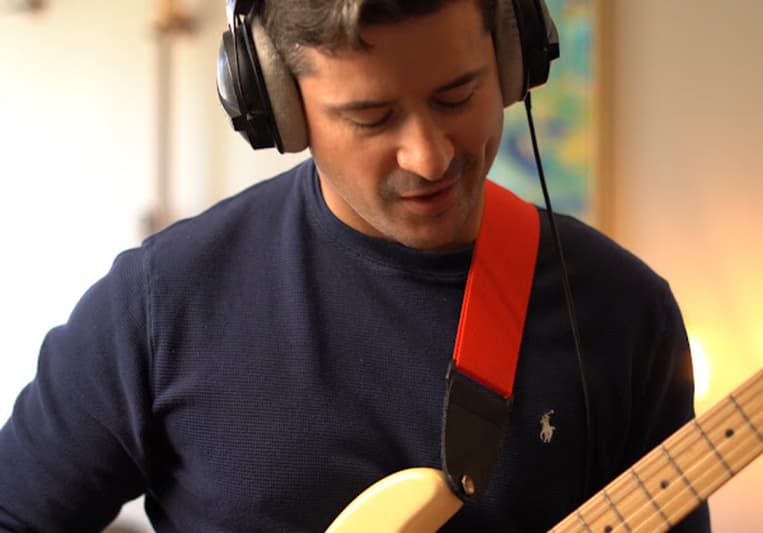
New to SoundBetter, not to scoring. Twenty years writing for commercials and indie films, and I am bringing that catalog here now. Intimate, acoustic-first music for picture: piano, guitars, hybrid electronics, all played and recorded here. One-stop clearance through my own ASCAP publishing, so nothing waits on rights.
I write music that sits under picture and does not fight it, and I play every note of it here. The foundation is acoustic: grand piano and acoustic guitar, recorded on a Yamaha C3 rather than assembled from samples, which is why it still sounds human under dialogue. A hybrid layer of synths, keys, sound design, and electric guitar adds weight or grit when a scene needs it. I am classically trained and came up through audio engineering, so one person writes the theme, builds the sound design, and mixes the stems.
Clients hire me for intimate solo piano and acoustic cues, hybrid electronic scores, orchestral game and film work, and guitar-driven rock or trailer material.
Commercial work has been commissioned by production companies and ad agencies, including Firehouse Subs, City Furniture, and Florida Keys tourism, plus original musicals. My artist catalog includes the Between Words solo-piano series, Piano Sketches (2017), Everything at Once (2022), and the hybrid single Valor (2025), with a hybrid album and orchestral game score in production.
Every commission arrives finished: master, stems, edited versions, and a filled cue sheet. I own master and publishing through Thirsty Canvas Music (ASCAP), so there is no rights hand-off. You get an exclusive license to your production; I keep the composition, which keeps the price reasonable. Full buyout at 2.5-3x.
Tell me about your project and how I can help, through the 'Contact' button above.
Interview with Jason Dzamba
Q: Tell us about a project you worked on you are especially proud of and why. What was your role?
A: The Piano Journal. It began in 2018 as a project with composers internationally recording improvised piano in the moment, and I have recently revived it on YouTube. My role is composer and curator: the playing is spontaneous and unedited, which is the hardest thing to get right and the most honest thing to listen to.
Q: What are you working on at the moment?
A: My own full-length album, which I am recording, mixing, and producing, plus an orchestral score for a video game I am developing. I am also bringing back The Piano Journal, a project of improvised solo piano recordings, on YouTube.
Q: What's your 'promise' to your clients?
A: That you will get what you are looking for, with options. I am not here to prove how masterful I am. Because I play and record multiple instruments, I can try different textures and approaches to land the right feel. If an idea is not serving your project, it goes.
Q: What was your career path? How long have you been doing this?
A: Over twenty years in music. I started professionally in commercial music, writing 30 and 60 second pieces for advertising, then moved into indie films. After a break I returned to my own work: solo piano, a new album, and game scoring. The Piano Journal began in 2018 with composers internationally recording improvised piano in the moment, and I have recently revived it.
Q: How would you describe your style?
A: Intimate, soft, and dynamic, anchored in acoustic piano and guitar. I also work in a hybrid space where real instruments meet electronic and dance-influenced grooves. Often the blend is what gets closest to what a scene needs.
Q: What's your strongest skill?
A: Reading what a client actually means. When someone asks for something brighter or more sparkly, my job is to translate that into specific decisions about voicing, arrangement, and tone. Years of commercial work with agencies and producers taught me to take notes from several people at once and turn them into one clear direction. Delivering their vision is the point, not showing off mine.
Q: What's your typical work process?
A: I start with the purpose: the style, the mood, and what each section has to accomplish. Then I find the core heartbeat of each piece, the tempo and pulse, because once that is right everything else is built around it. From there comes the melodic content and the core tone, then the decision about how minimal or dynamic each moment should be. The constant question is what serves the scene most.
Q: Tell us about your studio setup.
A: A Mac running Ableton Live and Logic Pro, in an acoustically treated live room with a stereo AKG microphone setup. The centrepiece is a Yamaha C3 grand piano, and I record acoustic guitars and electrics here: a Gibson SG, a Fender Eric Clapton Strat through a Fender tube amp, and a Fender Jazz Bass. I also keep synths on hand for sound design and unique textures.
Q: Describe the most common type of work you do for your clients.
A: Most of my work is helping a client find the right musical personality for their project, then delivering it. That means choosing instrumentation and style, recording real instruments here, mixing and mastering, and supplying every version the team needs, whether that is a 30-second cut, an instrumental, or stems. Directors, agencies, and producers each get the format their team actually uses.
I was the Performing Artist, Producer in this production
- play_arrowSample 1
- Film ComposerAverage price - $300 per minute
- Game AudioAverage price - $700 per day
- Composer OrchestralAverage price - $400 per song
- Sound DesignAverage price - $500 per minute
- ProducerAverage price - $400 per song
One revision included on custom cues, additional $150/hr. Turnaround 5-7 business days; rush +30-50%. Master, stems, edits and a filled cue sheet with every commission.
- Yamaha C3 grand piano; acoustic guitars; Gibson SG and Fender Eric Clapton Strat through a Fender tube amp; Fender Jazz Bass; AKG stereo microphone setup in a treated live room; Ableton Live and Logic Pro
