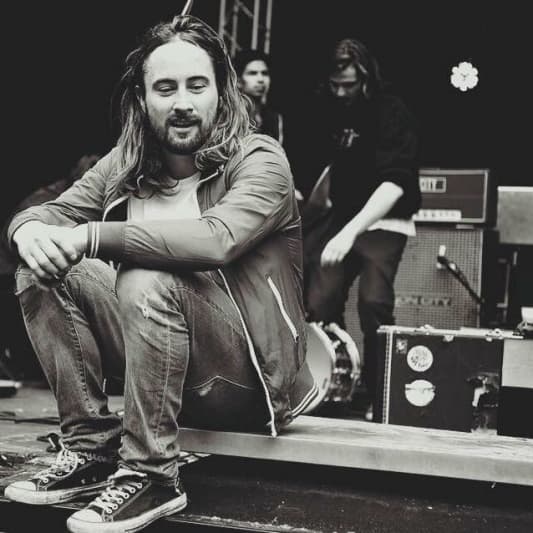
I've recorded and mixed live sessions for Iceage, The Murder Capital, Mikal Cronin and Bambara amongst a lot of other artists, as well as for KEXP. Founder of Tapetown Studio in Denmark, where I've recorded and mixed albums, EPs and singles for the past 15 years.
I'm Rasmus Bredvig, a Danish producer and mixing engineer and the founder of Tapetown Studio (2011). Most of what I mix was played live: concerts, festival sets, on-location sessions and bands recording together in one room. Every session we film is fully live, no overdubs.
KEXP came to SPOT Festival in Aarhus in 2022 and I recorded and mixed their four sessions there: Rigmor, Brimheim, Jeuru and JJ Paulo. Across KEXP and the Tapetown channel I've mixed more than 70 live sessions, with Iceage, The Murder Capital, Mikal Cronin, Bambara, Moaning, Ulrika Spacek, The Telescopes, Elias Rønnenfelt and many more, in all places you can imagine such as concert halls, clubs, bowling alleys, concrete boxes and glass rooms.
Live recordings have their own problems: bleed, the PA in the vocal mic, a crowd that's part of the song, a room nobody chose for its acoustics. I don't try to turn that into a studio record. I keep what made the night good and fix what gets in the way.
I also mix studio records remotely for bands in Europe, the UK and North America: post-punk, shoegaze, dream pop, garage, psych and indie, especially records played live in the room, working hybrid with an analogue console in the chain.
I'd love to hear about your project. Click the 'Contact' button above to get in touch.
Interview with Rasmus Bredvig
Q: Tell us about a project you worked on you are especially proud of and why. What was your role?
A: KEXP's sessions at SPOT Festival 2022: Rigmor, Brimheim, Jeuru and JJ Paulo. I recorded them with Jonna Aspeklev as assistant and mixed all four. It had to meet KEXP's standard and still sound like four bands playing a room in Aarhus, not like a studio. The location gave us a pretty difficult sound-environment and the timeschedule we had to complete it in was also very tight due to festival constraints. But it ended up really well, with Kevin, who was the KEXP dj they sent, thanking us after saying that it felt just like being at home in the KEXP studio, the atmosphere was great and he really appreciated how we worked.
Q: What advice do you have for a customer looking to hire a provider like you?
A: Send the multitracks, not just the board mix. Include the audience and room mics even if they sound bad on their own. Don't fix things before you send them. And hire someone who has mixed live material in your genre, because a live mix and a studio mix are different jobs, you need it to come together a bit different.
Q: What was your career path? How long have you been doing this?
A: I started as producer and technician in a basement studio in Copenhagen in 2007 and then moved to Feedback Studio in Aarhus in 2009 and started Tapetown in 2011. We co-founded the Lydhavnen studio community in 2012. I've played more than 200 concerts in touring bands, which is most of why I've felt drawn to live recordings. Since 2017 Tapetown Sessions has filmed bands from all over the world, always fully live, no overdubs.
Q: How would you describe your style?
A: Alive rather than polished. I'd rather keep a little dirt and randomness in a mix than sand the nerve off it.
Q: Can you share one music production tip?
A: Don't record to a click. Dont mix in solo. Take more breaks
Q: What type of music do you usually work on?
A: Post-punk, shoegaze, dream pop, punk, garage, psych, americana and indie, mostly played live. Also bands and artists who want their record to sound like a room full of people playing, whatever the genre.
Q: What's your strongest skill?
A: Really making a mix come together and understanding the aesthetic and intent of a song. When everything's in place but it doesn't lock yet, I go through and touch everything a little: a bit of compression, EQ and level, push some things harder, until everything really sits sits together.
Q: What are you working on at the moment?
A: Building our new studio at Friland on Djursland, Denmark, which opens in 2027, and releasing this year's live sessions from SPOT Festival.
Q: Is there anyone on SoundBetter you know and would recommend to your clients?
A: Gustav Scheel. He mixes and masters with me at Tapetown Studio and handles most of our studio mixes, especially indie, folk and Americana. Where I push things edgy, he goes cleaner and more hi-fi.
Q: Analog or digital and why?
A: Both. I mix hybrid, with analogue gear where it adds something and digital where it's faster and cleaner. The gear matters less than the listening.
Q: What's your 'promise' to your clients?
A: Your band will sound like your band on its best night, not like a template.
Q: What do you like most about your job?
A: Catching a take that only happened once, and making sure the mix doesn't lose it.
Q: What questions do customers most commonly ask you? What's your answer?
A: Can you fix it in the mix? Some of it, yes. But the best live mixes come from keeping the take and fixing only what gets in the way. How long does it take? It depends on what's on the desk, but a real release date can usually be met.
Q: What's the biggest misconception about what you do?
A: That a live recording is a rough draft of a studio record. The bleed between the mics is often what makes it feel like a band. Clean everything up and you lose the reason you recorded it live.
Q: What questions do you ask prospective clients?
A: What did it feel like in the room? Which take or which night do you love, and why? Did you record separate tracks, and are there ambience or audience mics? Is there video it has to sync to? What would you hate to lose?
Q: What do you bring to a song?
A: Coherence. I make a band sit together so it feels like one performance, without losing what made the take good.
Q: What's your typical work process?
A: I listen to the whole set before I touch anything and pick the moment that has to come across. Then I build the mix from the room and the drums, not from the close mics, so it sounds like a band in a space. Vocals go on top of that, and the crowd is treated as part of the arrangement. Then the final pass, and your notes.
Q: Tell us about your studio setup.
A: Right now I record at a temporary setup on Djursland, Denmark, around an Oram T-series 32-channel console, while we build our new studio at Friland, which opens in 2027. On-location sessions get recorded wherever the band is playing: concert halls, clubs, bowling alleys, a brewery, a glass museum. Mixing is hybrid: digital editing, then analogue processing.
Q: Describe the most common type of work you do for your clients.
A: Mixing live sessions and concert recordings for video and release, and mixing records that bands recorded live in one room.
- Mixing EngineerContact for pricing
- ProducerContact for pricing
- Mastering EngineerContact for pricing
- Recording StudioContact for pricing
Every project is quoted after I've heard the recording. Revisions until we both agree it's right. Mixed to picture for video sessions on request. Mastering in-house at Tapetown if you want it.
- Iceage
- The Murder Capital
- The Telescopes
- Oram T-series 32-channel console
- AEA R88 stereo ribbon
- MADI multitrack recording
- hybrid analogue mix chain
