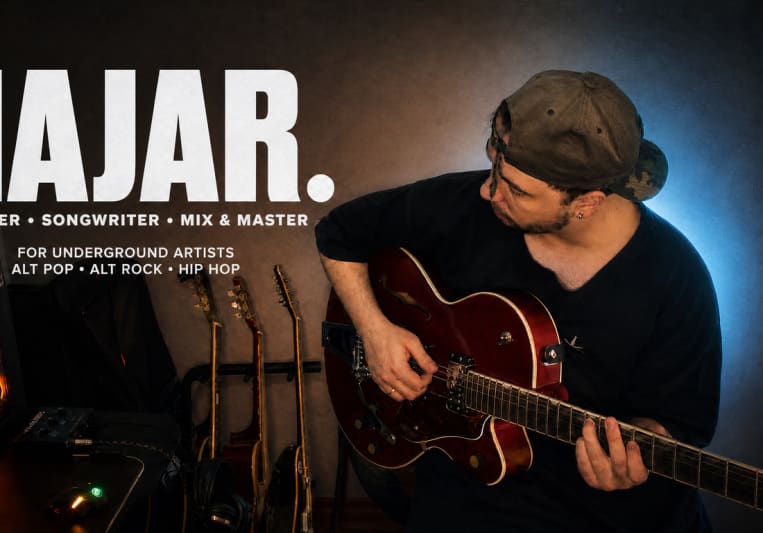
Guitarist, songwriter and aspiring music producer focused on developing original songs through arrangement, guitar, MIDI and production.
Hi, I’m NAJAR — a guitarist, songwriter and aspiring music producer based in São Paulo.
I’m currently building my first professional credits in music production. My experience so far is centered on my own songwriting and beat-making projects, including a small BeatStars store. I have also completed courses in mixing and mastering engineering and continue developing my production skills.
I’m especially interested in alternative pop, alternative rock, hip-hop and genre-blending music. I can contribute with songwriting, guitar parts, arrangement ideas, MIDI, sound design and production support. I also play jazz and blues guitar as a hobby; these are not my main composition or production genres.
I’m open to working with independent artists who have a demo or musical idea and want to explore a clear creative direction. My goal is to communicate honestly, preserve the artist’s intention and keep developing through each project.
Would love to hear from you. Click the contact button above to get in touch.
Languages
- English
- Portuguese
Interview with NAJAR.
Q: What's your typical work process?
A: For a new collaboration, I would first discuss the artist’s goals, references, emotional direction and the current state of the song. We would define a realistic scope, then I would develop arrangement, guitar, MIDI or production ideas and share progress at clear checkpoints. Clear communication and honest expectations are important to me while I continue building my professional experience.
Q: Tell us about your studio setup.
A: I work from a practical home setup for songwriting and beat-making, centered on Reaper, guitars, MIDI instruments, Kontakt, LABS and a focused collection of plugins. I have completed courses in mixing and mastering engineering and continue developing my skills through personal projects and study. My current focus is songwriting, arrangement and production rather than presenting myself as an established mixing or mastering engineer.
Q: Describe the most common type of work you do for your clients.
A: I am currently building my first professional credits in music production. My work so far is focused on my own songwriting and beat-making projects, including a small BeatStars store. I am developing my skills in arrangement, guitar, MIDI, sound design and production, and I am open to collaborating with independent artists as I continue growing.
Q: What was your career path? How long have you been doing this?
A: My musical background began in 2009 with classical guitar studies, which built my foundation in technique, theory and harmony. Around 2014, I began producing music and developing my skills in arrangement, MIDI, recording, vocal processing, sound design, mixing and mastering. Since then, I have explored alternative pop, alternative rock, hip-hop and experimental production, while working on my own music and collaborating with independent artists. I also play jazz and blues guitar as a personal hobby, but those are not the genres I primarily compose for clients.
Q: How would you describe your style?
A: My style is melodic, atmospheric and contrast-driven, often balancing melancholy, tension, aggression and hope. I enjoy combining strong songwriting with layered textures, expressive guitars, vocal detail and purposeful production choices. The result can move between intimate and energetic, depending on what the song needs.
Q: What type of music do you usually work on?
A: I mainly work on alternative pop, alternative rock, hip-hop and genre-blending projects. I’m also comfortable bringing guitar-based musicianship, atmospheric textures and melodic ideas into a production. I play jazz and blues guitar as a personal hobby and source of musical development, but I do not primarily compose or produce those genres for clients.
Q: What's your strongest skill?
A: My strongest skill is translating an artist’s intention into a cohesive musical direction. I can move between arrangement, guitar, MIDI, vocal editing, sound design and mixing while preserving the emotional core of the song.
Q: What do you bring to a song?
A: I bring a combination of musical perspective and practical production. I look for the emotional center of the song, then strengthen it through arrangement, guitar parts, vocal detail, textures, dynamics and clear mix decisions, always keeping the artist’s identity at the center.
Q: What other musicians or music production professionals inspire you?
A: My main production and songwriting references include alternative pop, alternative rock, hip-hop, experimental pop and artists who use texture and strong atmosphere. I also play jazz and blues guitar as a personal hobby, which continues to enrich my musicianship and harmonic vocabulary, although those are not the genres I primarily compose or produce for clients.
Q: Tell us about a project you worked on you are especially proud of and why. What was your role?
A: One project I’m especially proud of is an instrumental track I’m currently finalizing for release on BeatStars. It’s still in the mixing stage, but it represents my current approach to production, focusing on arrangement, atmosphere, and emotional development. I’m also developing original music with my band, which allows me to explore songwriting and creative direction in a collaborative context.
Q: What are you working on at the moment?
A: At the moment, I’m working on my own songwriting and beat-making projects, including instrumental tracks for my BeatStars store. I’m also continuing my studies in production, mixing and mastering while building my first professional music-production credits.
Q: Is there anyone on SoundBetter you know and would recommend to your clients?
A: I'm still getting to know the SoundBetter community, so I don't feel qualified to recommend specific providers yet.
Q: Analog or digital and why?
A: I appreciate both analog and digital workflows. I’m inspired by the depth and character of analog hardware, but I work primarily in a digital environment for flexibility and efficiency. What matters most to me is using the tools that best serve the creative direction of the song.
Q: What's your 'promise' to your clients?
A: My promise is simple: honesty, communication, and commitment.
Q: What do you like most about your job?
A: I’m passionate about the full music creation process, especially production and creative development. I’m continuously improving my mixing and mastering skills, but my main strength lies in building arrangements, shaping sound, and adapting ideas into complete musical directions. I work best in alternative, indie, and rock-oriented styles, where I have stronger references and creative intuition.
Q: What questions do customers most commonly ask you? What's your answer?
A: One of the most common questions I receive is whether I can translate a reference or an idea into a finished result that matches what the client is imagining. My answer is that I’m very comfortable working from references, whether that’s a specific artist, a genre direction, or even an AI-generated idea. The key part of my process is understanding the intention behind the reference and adapting it into something that works in a real musical context, while preserving its core identity.
Q: What's the biggest misconception about what you do?
A: Many people think production is mostly about equipment and software. While tools matter, the most important part is understanding the song and making creative decisions that support the artist's vision.
Q: What questions do you ask prospective clients?
A: I usually ask: What is the vision for the song? What artists or songs inspire this project? What emotions should the listener feel? What stage is the project currently in? What would make you consider this project a success? These answers help me understand both the technical and artistic goals.
Q: What advice do you have for a customer looking to hire a provider like you?
A: Look beyond technical skills. Find someone who understands your goals, communicates clearly, and is genuinely interested in helping your project succeed. A good creative partnership often matters more than a long list of equipment or credentials.
Q: If you were on a desert island and could take just 5 pieces of gear, what would they be?
A: A laptop A guitar Audio interface Studio headphones A MIDI controller
Q: Which artist would you like to work with and why?
A: Mainly Paul Meany and TOP. Their willingness to experiment with different genres while maintaining a clear artistic identity is something I deeply admire.
Q: Can you share one music production tip?
A: The song always needs a clear focus. The role of every element in the arrangement is to support and enhance that focus, never compete with it.
I was the Instrumental production, arrangement and mixing; vocal sample from Cymatics library in this production
- play_arrowDesires
- Ghost ProducerAverage price - $100 per song
- Songwriter - MusicAverage price - $70 per song
- Acoustic GuitarAverage price - $25 per song
- Electric GuitarAverage price - $25 per song
- Keyboards - SynthAverage price - $50 per song
- Pop-Rock ArrangerAverage price - $70 per song
One revision included. Timelines vary by project. Final files after payment. References encouraged before starting. No refunds once production begins.
- REAPER
- Kontakt
- LABS
- Cymatics plugins
- electric and acoustic guitar
- MIDI composition
- arrangement
- sound design and songwriting
