Mixing & mastering engineer with 25M+ streams, trusted by artists worldwide. Passionate about bringing your music to life.
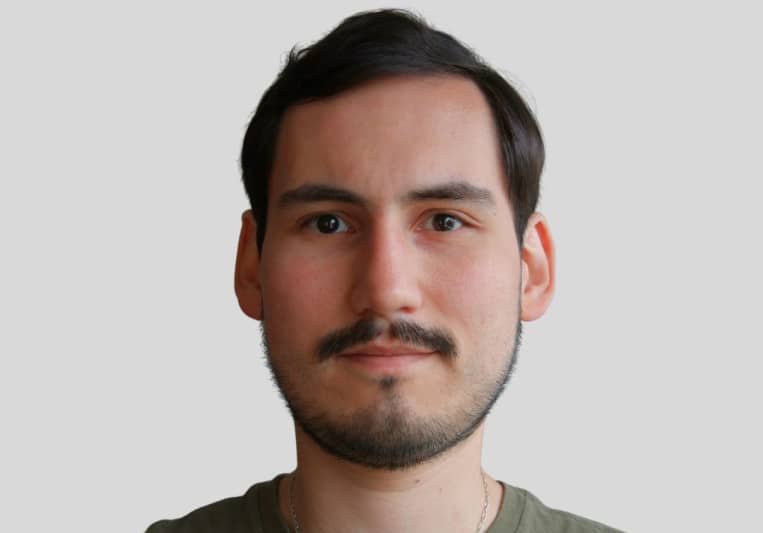
My name is Christian. I’m a mixing & mastering engineer and founder of Crone Audio, with over 25 million streams across digital platforms. I’ve worked with artists and producers from the US, Canada, Latin America and Europe, helping them achieve professional, release-ready sound.
My approach is musical first. I focus on clarity, balance and emotion, making sure every element serves the song. With a strong background as a musician, I understand how real instruments should sound and feel.
Whether it’s a full mix or final master, I aim to deliver clean, powerful and honest results. Always respecting your artistic vision.
I treat every song like it’s my own. Let’s bring your music to life and feel free to reach out!
Contact me through the green button above and let's get to work.
Credits
Languages
- English
- German
- Spanish
Interview with crone audio
Q: Tell us about a project you worked on you are especially proud of and why. What was your role?
A: There are two projects I’m especially proud of. The first one is with a Colombian artist, Juan Camilo García, known as Este es García, and his producer Oupi. I first connected with them in my early days with Crone Audio, when I was sharing tips on Instagram. Oupi reached out, and we worked on a track together. Since then, we’ve been working consistently for almost five years. It has been very rewarding to witness their evolution — from their early stages to where they are now in terms of songwriting, production, and overall artistic growth. What makes this project special for me is not only the music, but also the fact that we all grew in parallel. I was developing as an engineer while they were developing as artists, and today we still maintain that connection across countries, working remotely. My role has always been mixing and mastering. The second project is a group called Maceradoz de Lima from Peru, who focus on boleros. During the pandemic, I was giving online classes and consulting sessions, and through that process I met them. They shared their idea of creating a bolero project, and it was very exciting to see that vision eventually become a real artistic project over time. I’ve mainly been involved in mixing their songs, and it has been a very emotional and rewarding experience to be part of a project that started as an idea and later became a real musical journey.
Q: What are you working on at the moment?
A: At the moment, I’m mainly focused on mixing and mastering projects for independent artists across different genres, especially pop, urban, and more organic productions. I’m also working on refining and improving my workflow, making sure every project I take on delivers a consistent, high-quality and emotionally impactful result. Alongside client work, I’m continuously developing my sound and approach, experimenting with new techniques and staying up to date with modern production trends, so I can keep offering a competitive and musical result for every artist I work with.
Q: Is there anyone on SoundBetter you know and would recommend to your clients?
A: I think Andrés Mayo is a highly respected mastering engineer, originally from Argentina. I really admire his work and his approach to mastering. He has a very solid and musical way of shaping the final sound. I know he also has a strong presence on SoundBetter with an impressive portfolio. Without a doubt, he is someone I would confidently recommend.
Q: Analog or digital and why?
A: For me, today it’s as simple as choosing what works best for you — what best fits your workflow and lifestyle. In my case, I prefer digital because of the way I work and live day to day, especially the flexibility it gives me to move around and work from different places. However, what I don’t think should be questioned is that both analog and digital are fully capable of delivering 100% professional results. We are in an era where the tools are more than powerful enough — what ultimately defines how something sounds is the person behind the tools. That’s why taste and personal approach are so important. Each engineer has a certain “signature” or sensibility, and that’s often what leads an artist to choose one over another. In my opinion, neither is better than the other. It really comes down to preference. Both have their own advantages and limitations, but none of them are significant enough to say that one approach is inherently superior. It’s all about what fits best for each person and their way of working.
Q: What's your 'promise' to your clients?
A: My promise to my clients is that we will arrive at a result they truly love and feel proud of. For me, every song is like the “child” of an artist — something that is being brought to life and is ready to be shared with the world. Because of that, my goal is for the artist to feel truly confident, excited, and proud to release it, and to want to show it to as many people as possible. That feeling is what defines success for me. This is my commitment to every client and every project I work on.
Q: What do you like most about your job?
A: What I enjoy most about my job is that it feels like my hobby. For me, making music is something genuinely fun, and that doesn’t take away from the professionalism I put into it — on the contrary, I take it very seriously, but I truly enjoy the process. One of the most rewarding parts is seeing the artist happy with the final result. When someone comes in with a song they already love, and they leave the process even happier with what we created together, that is the best reward for me. I also really value working with artists who may have less experience or who have had not-so-positive experiences before. In those cases, I try to guide and explain parts of the process — not from a place of superiority, but from a desire to share knowledge. I believe education and communication are very important in this industry, and when artists understand the process better, they also know what to expect and how to get the best results. On top of that, I really enjoy the creative freedom my work allows. Every project feels like a new world, and there are no strict limits — it’s not about following a fixed formula, but about making musical decisions that serve each song individually. That creative freedom is something I truly value in what I do.
Q: What questions do customers most commonly ask you? What's your answer?
A: The most common question I get is about time — how long the process will take. My answer is always the same: it depends. Technically, a song can be mixed in one day and still sound good in terms of balance, clarity, and translation across different systems. It won’t sound dull, harsh, or unbalanced. However, that extra time is what allows the song to go beyond “sounding good” and actually start communicating something deeper. That’s why I usually explain to clients that while a mix can be done quickly, it doesn’t necessarily mean it will be the best possible version for their song. With more time, we can always achieve a better and more refined result. In most cases, when I explain this, clients understand the value of slightly extending the timeline, which is usually just a few extra days, but makes a significant difference. Another common question is whether I work only in the box or if I use hardware. Today, with the evolution of technology, high-quality results can be achieved entirely in the box. Plugin development and monitoring tools like Slate VSX have made it possible to work professionally from anywhere in the world. Some people still assume that not using hardware means a lower-quality result, but that’s not the case. I work 100% in the box, and that doesn’t limit the quality or competitiveness of the final result. In fact, I’ve had cases where clients preferred my in-the-box mix over an analog mastering version they tried elsewhere, not because of the format itself, but because of the artistic and musical decisions behind it. At the end of the day, both analog and digital are just tools. What really matters is the decisions you make and how you use them to serve the song.
Q: What's the biggest misconception about what you do?
A: One of the most common misconceptions about mixing and mastering is that it’s some kind of “magic.” In reality, it isn’t. Every stage of music production is essential for the next one to succeed. It’s not enough to have a great mix engineer if the song itself — the lyrics, harmony, or arrangement — doesn’t communicate anything. And on the other hand, even the best song can lose its impact if it’s handled in a purely mechanical or robotic way during post-production, without emotional intention. Many people think they can simply send a recording and the mix engineer will “fix everything” or create the final sound from scratch — choosing sounds, adding layers, or making creative decisions that actually belong to earlier stages of production. While there is a creative aspect in mixing, especially when the client allows it, the material should already come with a clear direction from the production stage. My approach is to respect what already works in the production. If something is already strong, I keep it. If something can be improved, I may ask for clean elements or recreate and enhance them when it serves the song. Sometimes I also add subtle layers when the music calls for it, but always in service of the track. In the end, mixing is not just about volume, panning, or EQ — it’s a much broader and more artistic process focused on translating emotion and intention, not just polishing sound.
Q: What questions do you ask prospective clients?
A: When I work with new clients, there are two main things I focus on. The first one is their artistic vision — what they want to communicate through the song on an emotional level. This is essential for me, as I always aim to understand the feeling and intention behind the music before anything technical. The second important aspect is time. Many clients come in expecting very fast turnarounds, sometimes within one or two days. In my experience, a song deserves proper time and attention, especially considering everything that goes into its creation before post-production. I believe that taking the necessary time always leads to a better result. When a client is open to a realistic timeline and a focused collaboration, I find that we can usually reach a much better outcome. I also prefer to keep the process efficient and structured, with a limited number of revisions, so we can move forward with clarity and purpose rather than endless changes.
Q: What advice do you have for a customer looking to hire a provider like you?
A: My main advice is to look for a provider who truly understands your artistic vision, not just someone who can process audio technically. A great mix is not only about sound quality, but about how well it represents what you want to express as an artist. I would also recommend being open and clear about your goals, references, and expectations from the beginning. The more context a mixing engineer has, the better they can translate your ideas into a final result that feels authentic and impactful. Most importantly, choose someone who listens carefully and communicates well throughout the process. A strong collaboration between artist and engineer is key to achieving a result that truly connects.
Q: If you were on a desert island and could take just 5 pieces of gear, what would they be?
A: In a scenario as extreme as a desert island setup, assuming all my plugins are already inside my computer, I would keep things very minimal and practical. I would take my MacBook as my main workstation, my Slate VSX headphones for accurate monitoring, and a comfortable mouse to work efficiently. Since it’s a desert island, I would also include an umbrella for shade and a bottle of water to stay hydrated. With just these essentials, I would still be able to work and make reliable mixing decisions based on what I hear.
Q: What was your career path? How long have you been doing this?
A: I studied music at university, where I trained as a saxophonist as well. During the final two years, I had to choose a specialization and decided to focus on music production. That’s where I eventually discovered post-production, specifically mixing and mastering. It was during an introductory class on these concepts that I was introduced to this world by my teacher at the time, Juan Carlos Estremadoyro. The way he explained the process and showed me that there was a real artistic side to mixing and mastering had a strong impact on me and sparked a deep interest. From that moment in 2018, I never stopped. I finished university the following year, and even before graduating, I started working with classmates. Later, during the COVID pandemic, I continued developing my skills independently, working remotely and expanding my experience. I created an Instagram page called @croneaudio, which helped me connect with artists not only in Peru but also across different parts of Latin America, allowing my work to grow internationally. This is how my journey started. Looking back, if it hadn’t been for those university classes and the realization that mixing and mastering can be a deeply artistic process, I probably wouldn’t have pursued this path.
Q: How would you describe your style?
A: I would describe my style as focused on making a song truly feel something to the listener. For me, the most important goal is that the music connects emotionally and doesn’t go unnoticed. Depending on the intention of the song, it can evoke different states — sometimes it’s about energy, movement, and excitement, where the listener feels like they want to move or react. Other times, it can be more reflective and introspective, taking the listener into a deeper emotional space. And in some cases, the goal is more about calmness and support, creating a subtle but meaningful presence. That’s why my focus is always on emotion and intention rather than a fixed formula. I want each song to have its own identity and impact, so that when someone hears it, it doesn’t feel like just another track, but something that stays with them.
Q: Which artist would you like to work with and why?
A: I would love to work with artists like The Weeknd, Bruno Mars, Rosalía, Taylor Swift, and María Becerra. I really admire how intentional and well-crafted their music is, both from a production and artistic perspective. With The Weeknd, I find it very inspiring how the production feels designed with the mix in mind from the very beginning, balancing experimental sound design with a strong pop identity. Bruno Mars is another artist I deeply respect — his music is incredibly musical, dynamic, and emotionally powerful at the highest level of production. Rosalía also stands out to me for her strong artistic vision and how each project brings a clear concept while constantly pushing sonic boundaries. I would also love to work with Taylor Swift. I deeply admire the level of precision, consistency, and excellence across her entire artistic output. Everything feels extremely well thought out, from songwriting to production and execution, and working in that kind of environment would be an incredible challenge and learning experience. From Latin America, I’m a big fan of María Becerra. I really appreciate her artistic evolution, her willingness to explore different genres, and the way she collaborates closely with her team. It’s something I connect with a lot, as I also enjoy working across different styles and not staying in just one direction. Being part of creative teams like these would be extremely inspiring for me, and I believe it would also enrich my own artistic perspective and growth as an engineer.
Q: Can you share one music production tip?
A: One great tip I would give, especially from my perspective in post-production, is to trust your intuition. In this craft, there is no absolute way of knowing if something is right or wrong, because at the end of the day, it all comes down to taste. And that’s what makes it so interesting. I believe that eventually, all engineers reach a point where they can deliver excellent work, but an artist will choose one over another based on personal taste and the unique “signature” each engineer has. That’s why intuition is so important. Sometimes we overthink things, trying to make them more perfect, but after listening too many times, we can lose perspective. Often, what felt right in the first take is actually the best decision. So my advice is simple: trust your intuition, because it usually leads you closer to what you truly want to achieve.
Q: What type of music do you usually work on?
A: My work is quite diverse due to my background in Peru and Latin America, as well as the variety of musical trends I’ve been exposed to. I’ve worked on many urban-influenced genres such as hip-hop, rap, and pop, which are very common in today’s productions. At the same time, I’ve also had the opportunity to work closely with a band, exploring styles like boleros, latin, rock, and jazz fusion. For me, the genre is not a limitation. I enjoy working on different styles and often welcome new challenges. Even if I haven’t worked on a specific genre before, I like to explore it and develop a new approach. This keeps my work fresh and helps me grow as an engineer. On a personal level, I really enjoy working with recordings that feature real instruments. I know that nowadays it’s very common for productions to rely heavily on MIDI and sample libraries, which is completely fine, but I find it especially inspiring when the core of a project is built around real performances. Those kinds of sessions are very rewarding to work on and I truly enjoy them.
Q: What's your strongest skill?
A: My strongest skill is my ability to quickly and accurately understand the artist’s vision. In most cases, I’m able to translate what they want to communicate into a clear musical direction, even from the way they describe it in words. This is something many clients have told me they really value when working with me. I combine that understanding with both technical tools and an emotional approach to the mix, allowing me to reflect what the artist is imagining in a musical way. For me, this ability to connect with the artistic intention is essential in post-production work. I believe this skill comes from empathy and patience. Many times, people focus only on finishing quickly, but I take the time to truly understand what the artist is trying to express. I don’t just work on the song — I try to understand the person behind it.
Q: What do you bring to a song?
A: What I bring to a song is fresh ears, experience, and above all, musicality. Before being a mixing engineer, I am a musician, and I deeply value feeling and enjoying the music. What I aim to bring into every mix is the ability to transform a collection of sounds and instruments into a cohesive song that truly communicates emotion, rather than something mechanical or robotic. While the technical side of mixing is important, I never lose sight of the musical intention behind the track. I don’t approach a mix as just levels and processing — I always try to contribute creatively as well, almost like an additional layer of production when needed. Even in mastering, my focus remains on enhancing the musical and emotional impact of the song until the very end. Ultimately, what I bring is perspective, musical sensitivity, and a strong focus on emotion over pure technique.
Q: What's your typical work process?
A: My typical workflow starts with an initial conversation with the artist to clearly understand the vision and message behind the song. Once that is established, I listen to the material they’ve been working on, including rough mixes, to align with their direction and provide feedback or suggestions when needed. From there, I move into a more technical stage where I request all the necessary session details, including properly organized tracks, references, and delivery expectations. I also provide a clear document outlining the process, revisions, and workflow so everything is transparent from the start. Having a reference mix and rough mix is essential for my process. I deliver an initial version for feedback, and we usually go through up to three additional revisions, which in most cases is enough to reach a final, release-ready result. My main goal is always to ensure the artist is fully satisfied with the final outcome. On a technical level, I work in a very organized way using my own templates and session structure. I often apply a top-down approach, working with buses and groups to shape the mix in a musical and efficient way. I focus on subtle harmonic processing, light EQ, and compression at a macro level to create movement and cohesion, while still making precise adjustments when needed. Over the years, my approach has become more minimalistic. I’ve learned that not everything needs heavy processing — sometimes the best decision is simply balancing levels, placement, and letting the original recording breathe. My focus is always on serving the song and enhancing its natural emotional impact rather than over-processing it.
Q: Tell us about your studio setup.
A: My work is 100% in the box. I primarily use Pro Tools as my main DAW, along with professional plugin suites from Plugin Alliance, Slate Digital, Soundtoys, DMG Audio, Sonnox, McDSP, among others. I also rely on tools like the Kirchhoff EQ from DMG Audio for precise processing. My studio setup includes Genelec monitoring, and I also work with the Slate VSX system, which helps me maintain accuracy across different listening environments, especially since I often travel and work from various locations. For me, what truly matters today is the final result. With the great tools available, it doesn’t matter how you get there as long as the outcome serves the song. I believe gear is not everything — what’s most important is how we listen and feel the music. My focus is always on the emotional impact and ensuring the song connects beyond the technical side.
Q: What other musicians or music production professionals inspire you?
A: ’m mainly inspired by Michael Brauer, Andrew Scheps, and Manny Marroquin. I really admire Michael Brauer’s approach to dynamics and his way of thinking “in the box” while still keeping a very musical and emotional perspective in his mixes. I also connect a lot with Andrew Scheps’ philosophy, especially how he fully embraced digital workflows and translated his entire mindset into working in the box. I respect how he always puts the song first — knowing the technical side deeply, but never letting it override the emotional impact of the music. Manny Marroquin’s clarity and modern polish have also strongly influenced my approach to mixing and mastering.
Q: Describe the most common type of work you do for your clients.
A: I mainly work on mixing and mastering for artists who want to enhance the emotional impact of their music while keeping their original vision intact. My focus is on bringing out what the artist wants to express, ensuring clarity, balance, and a sound that translates well across all platforms. I also place great importance on client satisfaction, making sure they are fully happy with the final result. The goal is always to deliver a professional, competitive track that meets industry standards without losing its identity.
- Mastering EngineerAverage price - $80 per song
- Mixing EngineerAverage price - $200 per song
- Podcast Editing & MasteringContact for pricing
- SaxophoneAverage price - $70 per song
Revisions included per package. After final delivery and revision rounds, no further changes. Feedback via MixUp. Clients responsible for file backups after delivery.