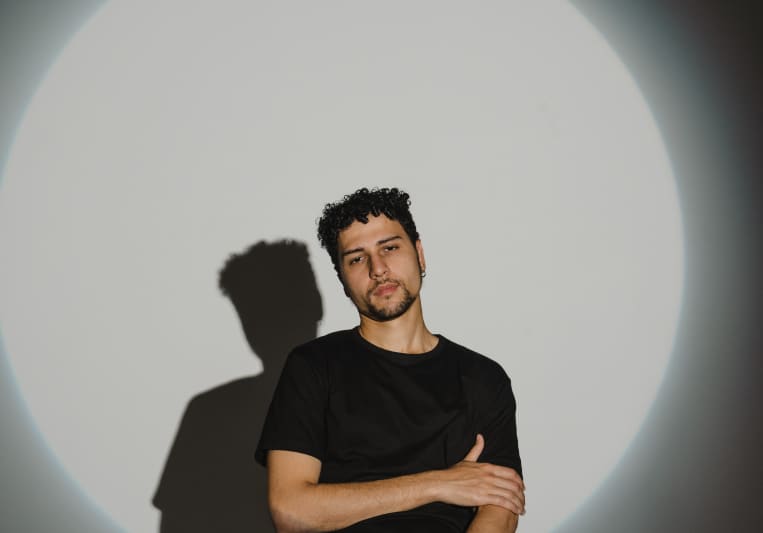
I help artists shape their sound and bring their vision to life through modern production across electronic, indie-pop, rock, and R&B/soul.
I’m Alfred, a music producer, sound designer and mixing engineer based in Buenos Aires with over 7 years of experience helping artists transform ideas into distinctive, industry-ready music. I specialize in Indie rock, pop, electronic, experimental, and genre-blending productions, combining innovative sound design with modern production techniques to create unique sonic identities.
Artists work with me not only for high-quality production, mixing, and sound development, but also for creative direction and artist development, shaping their sound, refining their vision, and elevating their releases to a professional level. My work spans electronic, rock, pop, and avant-garde projects.
Tell me about your project and how I can help, through the 'Contact' button above.
Languages
- English
- Spanish
Interview with Alfred
Q: Tell us about a project you worked on you are especially proud of and why. What was your role?
A: I worked as a producer, recording engineer, and mixing engineer for an experimental electronic/rock band. The project allowed me to apply both technical and creative aspects of music production, including microphone placement for multiple instruments, stereo recording techniques, and detailed session organization. Creatively, I experimented with production techniques such as doubling guitar lines and using time-stretching in Ableton Live to create unique textures and rhythmic movement. It was a project I’m especially proud of because it gave me the freedom to combine technical precision with artistic exploration.
Q: What are you working on at the moment?
A: I'm working on a Pop/rock song for an Argentine artist.
Q: Is there anyone on SoundBetter you know and would recommend to your clients?
A: No.
Q: Analog or digital and why?
A: I like to combine the best of both worlds. Analog gear offers warmth, depth, and harmonic richness, while the digital environment provides flexibility and control. Working in a DAW allows non-linear recording, faster workflows, and the freedom to experiment, knowing you can always undo and refine the process.
Q: What's your 'promise' to your clients?
A: I promise them they will feel fully involved and happy, we will have time to experiment and look for sounds but without losing focus.
Q: What do you like most about your job?
A: Understanding the client's vision, use my artistic and technical skills to translate the client's emotions into a song, shaping the tonal character of an instrument and crafting rhythmic arrangements.
Q: What questions do customers most commonly ask you? What's your answer?
A: Can you do everything I need for my song? Yes. I usually start by explaining the different stages involved in finishing a song: production, mixing, and mastering. Production focuses on developing the arrangement, sound, and overall direction of the track, while mixing and mastering are the final stages that prepare the song for release. I can also provide mixing and mastering if needed, but those services are quoted separately depending on the project.
Q: What's the biggest misconception about what you do?
A: Clients tend to assume I will mix and master their songs.
Q: What questions do you ask prospective clients?
A: 1. What style or genre of music do you make? 2. What do you feel the song is missing? 3. What stage is the song currently in? (idea, demo, partially produced, recorded, etc.) 4. Do you have reference tracks for the sound you’re aiming for? 5. How involved would you like to be during the production process? 6. Do you have a deadline for the project?
Q: What advice do you have for a customer looking to hire a provider like you?
A: Look for a music producer who genuinely wants to understand your ideas and respects your artistic vision. The right producer doesn’t just execute a task, they become a creative ally who helps bring your music to life.
Q: If you were on a desert island and could take just 5 pieces of gear, what would they be?
A: 1. Laptop. 2. Headphones. 3. Audio Interface 4. Electro-acoustic guitar. 5. Shure SM7B
Q: What was your career path? How long have you been doing this?
A: In 2014, I started studying Music Production and Sound Engineering. I finished college in 2017. I worked as a recording studio intern for almost two years. After that, I started working as a freelance music producer and mixing engineer with some independent artists and bands from Venezuela and Argentina.
Q: How would you describe your style?
A: My style is artist-focused and intuitive. I aim to understand the essence of the song and shape the production around it to create a cohesive and distinctive sound.
Q: Which artist would you like to work with and why?
A: Chet Faker, because he combines a strong musical background with the creative use of digital tools like DAWs and plugins.
Q: Can you share one music production tip?
A: When composing or producing a song, I like to separate the process into two phases: 1. The Playground Choose 3–4 elements (instruments, sounds, or textures) and allow yourself to experiment freely. Treat it like play-explore sound, texture, rhythm, and structure without judging the ideas too quickly. 2. The Housekeeping Return to the session about 24 hours later with fresh ears. This is when you clean up, organize, and refine the ideas you recorded. Separating these two phases helps keep creativity and editing from interfering with each other. It gives each mindset its own space and helps avoid getting stuck during the production process.
Q: What type of music do you usually work on?
A: Rock, pop, Indie rock, chillhop, experimental electronic music.
Q: What's your strongest skill?
A: I work with artists and bands to transform raw ideas and demos into fully realized productions. My process focuses on understanding the essence of the song and the artist’s vision, then shaping arrangement, sound design, and performance into a cohesive and distinctive sonic identity.
Q: What do you bring to a song?
A: I bring organization, tonal character, rhythmic ideas and textures recorded by synthesis or natural objects.
Q: What's your typical work process?
A: 1. Initial conversation: I start with a conversation with the client and ask a series of questions to better understand the artist’s vision, influences, and goals for the song. 2. Demo analysis: I listen to the demo several times to identify the key elements and overall essence of the track. 3. Notes and evaluation: I write down observations and potential improvements in composition, arrangement, sound quality, and performance. 4. Production roadmap: Based on these notes, I create a roadmap outlining the steps needed to achieve the desired sound and meet the client’s expectations or references. 5. Production proposal: I present a clear document to the client with my impressions and a brief diagnosis of how the song could be improved. 6. Session preparation: Once the work is approved, I map the song by identifying the key, BPM, and structure (Intro, Verse, Chorus, etc.). 7. Production priorities: I focus first on the core elements of the song, such as drum programming, vocal guide melodies, bass lines, or harmonic foundations. 8. Recording and editing: After recording and editing the necessary parts, I work toward achieving a clear and balanced tonal foundation. 9. Sound shaping: I apply processing such as EQ, compression, and effects to shape the sound of individual instruments and groups. 10. Enhancement and texture: Once the main elements are solid, I add textures and depth through synthesis, guitar doubling, and additional effects. 11. Delivery: I export a stereo WAV file with clear naming, including the artist name, song title, and version number (e.g., Sam Andrews – The Falling – Production V1).
Q: Tell us about your studio setup.
A: My studio setup starts with a pair of Adams T7V, an Audient id14 audio interface, an Arturia Minilab MkII MIDI controller, a Korg Minilogue XD synthesizer, a pair of Beyerdynamic DT 770 Pro 80 ohm, a Shure SM7B microphone, a Squier Jazz Bass, and a Cort Electro-acoustic guitar.
Q: What other musicians or music production professionals inspire you?
A: Quincy Jones, Rick Rubin, FINNEAS, Trent Reznor, Prince, Chet Faker, Gustavo Cerati, Gustavo Santaolalla.
Q: Describe the most common type of work you do for your clients.
A: I help artists and bands develop a clear sonic identity. I review demos, identify improvements in composition, arrangement, and sound quality, and strengthen the song while preserving its essence. I also record additional parts (guitar, bass, keys) and work primarily in Ableton Live and Logic Pro for recording, editing, arranging, and audio processing.
I was the Producer, bass player, mixing & mastering engineer in this production
- play_arrowThe Astralian Experience - The Departure
- Full instrumental productionAverage price - $250 per song
- Mixing EngineerAverage price - $200 per song
- Mastering EngineerAverage price - $50 per song
- Sound DesignAverage price - $250 per minute
- RestorationAverage price - $50 per hour
- Post EditingAverage price - $100 per track
- Programmed drumAverage price - $70 per song
- Projects include up to 3 revisions unless otherwise agreed.
- Additional revisions are billed at an extra fee.
- Delivery timelines depend on project complexity and will be agreed.
- Pink Floyd
- Arctic Monkeys
- Air
- Minilogue XD
- Adams T8V
- SM7B
- Audient interface.

First-time clients receive a special rate on production services.