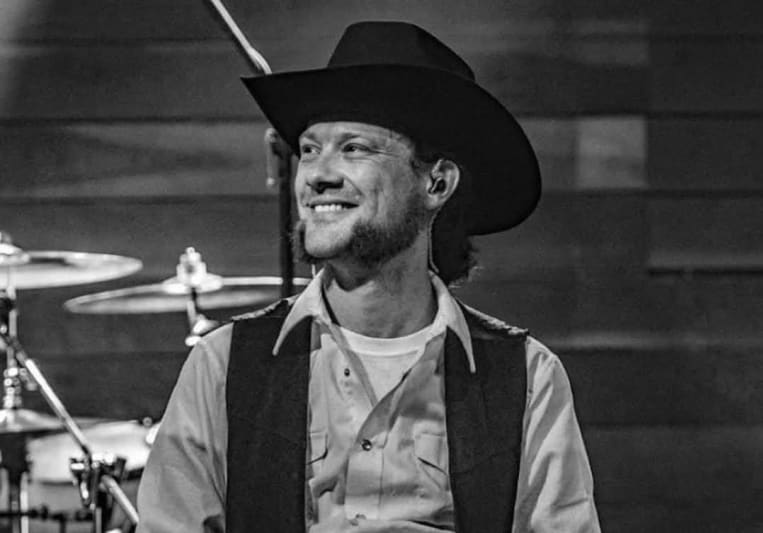
Touring pedal steel specialist offering broadcast-ready E9 & C6 tracks, from 90s Honky Tonk to modern cinematic textures.
I am a session instrumentalist bridging the gap between classic styles and modern sounds. With a Show Pro Custom D-20, I offer the full vocabulary of the instrument: from the crying ballads and driving shuffles of the E9 neck to the complex jazz chords and Western Swing textures of the C6 neck.
My philosophy is simple: Serve the Song. Whether you need a vintage 1950s "non-pedal" vibe, a 90s radio-ready sheen, or an experimental ambient soundscape, I have the specific gear and technique to dial it in.
My Promise:
Quick Turnaround: Standard delivery in 48 hours.
Pro Fidelity: Recorded via Kemper Profiler for industry-standard, mix-ready tone (or mic’d vintage amps for organic texture).
Versatility: I don't just play "licks." I play parts that support the vocal and elevate the emotion of the track.
I'd love to hear about your project. Click the 'Contact' button above to get in touch.
Interview with Mick Holdsworth
Q: Tell us about a project you worked on you are especially proud of and why. What was your role?
A: My four years touring nationally with Creed Fisher. Beyond playing steel, I served as the guitar tech and luthier on the road. It was a source of massive pride to deliver a high-quality product to fans night after night and to be part of a team that operated at such a high level of professionalism.
Q: What are you working on at the moment?
A: I split my time between remote session work and local sideman gigs in Austin. In my private studio time I am producing a concept album that fuses my love of Post-Punk and Surf Rock, proving that the steel guitar truly has no limits.
Q: Analog or digital and why?
A: Both. I have played everything from Dumbles to Helix. I love digital tools like the Kemper for the workflow because direct outs with stereo separation are unbeatable for remote consistency. But I admit sometimes you need the magic of a tube amp pushing air in a room. I am equipped for both and use a hybrid workflow to get the best of both worlds.
Q: What's your 'promise' to your clients?
A: I promise that you will be satisfied. I want you to be happy with what you have, and if you are not, I promise that I am available to communicate about it until it is right.
Q: What do you like most about your job?
A: I love being self-directed and I love the connections that music brings. Even though I am working remotely, I enjoy the social aspect of it and the excitement of knowing I am providing a service that I genuinely enjoy to people who are excited to hear it.
Q: What's the biggest misconception about what you do?
A: The biggest misconception is regarding the cost versus the time spent on a track. When I charge a fee for a song, some might perceive it as expensive for the actual time I spend recording. But the reality is that you are not paying for the hour it took to record. You are paying for the thousands upon thousands of hours of practice it took to get to the level where I can execute that part efficiently and professionally.
Q: What questions do you ask prospective clients?
A: I mostly ask procedural questions to make sure we are on the same page. I need to know technical details like sample rate and bit depth. I also want to establish clear expectations regarding the number of revisions. I hate to give a client something they were not expecting so I prefer to have those details decided in advance.
Q: What advice do you have for a customer looking to hire a provider like you?
A: Don't be afraid to ask for something weird. There can be a barrier to working with exotic instruments like pedal steel, but I am enthusiastic about bridging that gap. Whether you want traditional country or something experimental, there is a lot of joy in finding that destination together. You don't need to know the technical terms. Just send me a vibe and let's make it happen.
Q: If you were on a desert island and could take just 5 pieces of gear, what would they be?
A: First I would take a fiddle because it is the perfect self-contained instrument with infinite articulation. Second and third would be my pedal steel and a Kemper. I know it isn't purist, but the Kemper gets me 95% of the way to a tube amp with infinite flexibility. Fourth would be my trumpet to keep my ear sharp. Finally I would take a 4-track tape recorder because there is endless mileage in layering ideas and watching them evolve.
Q: What was your career path? How long have you been doing this?
A: I have been a serious musician for 30 years, starting on trumpet and moving to guitar and steel in my teens. I moved to Austin after attending the Roberto-Venn School of Luthiery and spent eight years working for Collings Guitars, which gave me a deep technical understanding of tone. I picked up the pedal steel at 27 and eventually transitioned to full-time touring in 2020. Since retiring from the road to be a dad, I dedicate my 500+ yearly studio hours to remote sessions and production.
Q: How would you describe your style?
A: I would describe my style as traditionally rooted but influenced by my background as a blues and rock guitar player. My center of gravity is the high period of Honky Tonk. I love the sharp single-coil tones and dominant seven sounds of Ralph Mooney and the Bakersfield style. I also love playing fast driving country, but I am just as happy playing long slow swells with smooth voice leading like Tom Brumley or Paul Franklin.
Q: Which artist would you like to work with and why?
A: Randall King. He sits in that perfect spot between Neo-Traditional and forward-looking contemporary country. I admire his songwriting and think his sound is exactly where the genre should be heading.
Q: Can you share one music production tip?
A: Capture the best performance at the source. That is 95 percent of the work. Trying to fix things by dragging them around on a grid or tuning them later usually yields diminishing returns and is exponentially more difficult than just spending the time to get the part right with the proper mic technique in the first place.
Q: What type of music do you usually work on?
A: My professional career is centered on Country, Americana, and Western Swing styles from the 1930s to the 1970s. However, I have eclectic tastes ranging from Gypsy Jazz to Post-Punk. I am just as comfortable playing a traditional Ralph Mooney shuffle as I am creating experimental ambient soundscapes for a rock or cinematic track.
Q: What's your strongest skill?
A: Tenacious consistency. My time on the road taught me that almost isn't good enough. I am obsessive about intonation and correctness. I would rather do ten extra takes to get something I am proud of than send you a file that makes me cringe. I also bring a luthier's eye to my gear so my instruments are always perfectly regulated and set up.
Q: What do you bring to a song?
A: I bring a sophisticated ear filtered through a deep respect for tradition. My background as a jazz trumpet player from age ten through college taught me harmony and discipline, but my heart is in the 1940s and 50s Western Swing and Honky Tonk era. I view the ideal session musician as someone who brings that harmonic knowledge into country music. I don't just play licks. I play parts that support the vocal, whether that is a crying ballad swell or a driving Bakersfield rhythm.
Q: What's your typical work process?
A: I take an engineer's mindset approach. First I review your reference tracks and any notes or charts you provide. Then I record a draft performance to get approval on the vibe and melodic choices. Once that is approved I go hard on intonation and articulation. I do not settle for good enough. I refine the performance until it is technically perfect. Finally you get a polished wet stem with my specific effects chain and a high-quality dry stem for safety.
Q: Tell us about your studio setup.
A: My setup is built for speed and tone. I track primarily through a Kemper Profiler into Logic Pro which gives me access to pristine and mix-ready profiles of classic amps like the Fender Twin or Peavey Nashville 400 with zero noise floor. This is perfect for remote work. When a track needs air I mic up my vintage tube amps, including a Supro Thunderbolt Plus and a rare Fender Custom Vibrosonic designed by Bruce Zinky. For microphones I use a Sennheiser MD421-II for amps and a matched pair of Rode NT5s for acoustic layering.
Q: What other musicians or music production professionals inspire you?
A: My top inspirations are the greats of the instrument. Moving from older to newer I look to Speedy West, Ralph Mooney, Buddy Emmons, Curly Chalker, and Hal Rugg. For more modern playing I am inspired by Paul Franklin and Travis Toy.
Q: Describe the most common type of work you do for your clients.
A: While I am currently focused on remote sessions, the bulk of my career has actually been on stage. I spent four years touring full-time with Creed Fisher, where my job was to master the recorded parts note-for-note and execute them perfectly three times a night for ten months out of the year. Now as a remote session player I bring that same discipline to your tracks. Whether you need a specific lick nailed or a creative part composed from scratch, I deliver polished and broadcast-ready stems that fit your vision.
- Pedal SteelAverage price - $100 per song
Two (2) revisions included. I deliver a polished stereo "Wet" mix (my tone) and a mono "Dry" DI for re-amping/safety. Standard turnaround is 48 hours.
- Paul Franklin
- Ralph Mooney
- Greg Leisz
- Show Pro Custom D-20 (E9/C6). Kemper Profiler. Vintage Amps: Supro Thunderbolt
- Fender Vibrasonic. Sarno Earth Drive. 1940s Rickenbacher Lap Steel. 1931 Gabriel Payne Fiddle. 1920s Bacon Banjo.

New Profile Intro Rate: $100/song