Dolby Atmos & stereo mix engineer delivering clean, punchy, industry-ready sound for hip-hop, R&B, and pop artists. I focus on vocal clarity, low-end balance, and depth so your music translates across all systems. Also offering mastering to ensure your record is polished and release-ready.
I’m a mixing and Dolby Atmos engineer based in Atlanta with over 10 years of experience working with hip-hop, R&B, and pop artists. I specialize in delivering clean, punchy, and emotionally impactful mixes that translate across all platforms—from streaming to club systems.
My approach is focused on vocal clarity, low-end balance, and depth, ensuring your music sounds professional, competitive, and true to your vision. Whether it’s a hard-hitting hip-hop track or a smooth R&B record, I shape each mix to enhance the emotion and energy of the song.
I also offer Dolby Atmos mixing for immersive streaming platforms like Apple Music and TIDAL, giving your music a wider, more dynamic listening experience. Mastering services are available as well to ensure your final record is polished, cohesive, and release-ready.
With a detail-oriented workflow and a strong understanding of modern production, I take pride in delivering high-quality results with clear communication and fast turnaround. If you’re serious about your sound and want a mix that stands out, I’m here to help bring your vision to life.
Tell me about your project and how I can help, through the 'Contact' button above.
Endorse NJ-Engineering2 Reviews

Interview with NJ-Engineering
Q: Tell us about a project you worked on you are especially proud of and why. What was your role?
A: One project I’m especially proud of was a vocal-driven record where the artist had a strong performance, but the session needed a lot of shaping to reach its full potential. My role was the mix engineer, and I was responsible for taking the raw session and turning it into a polished, release-ready track. The biggest focus was the vocals—I spent a lot of time cleaning, tuning, and shaping them so they felt clear, present, and emotionally connected to the instrumental. I also worked on balancing the production, tightening the low end, and creating depth so the track felt full without being overcrowded. What made the project stand out to me was the transformation. The final mix not only sounded more professional, but it also elevated the emotion of the song in a way that really connected with the artist. Seeing their reaction to the final version—and knowing it matched what they originally envisioned—was what made it especially rewarding
Q: What are you working on at the moment?
A: At the moment, I’m working on a mix of hip hop, R&B, and pop records for independent artists, mainly focused on vocal-driven tracks. A lot of my current work is centered around refining vocals—getting them clean, upfront, and emotionally connected—while making sure the production feels balanced and competitive. I’m also continuing to build out my Dolby Atmos workflow, taking select records into immersive formats for clients who want a more spatial listening experience. At the same time, I’m refining my overall mix process and templates to stay efficient and consistent, so I can deliver high-quality results with a quick turnaround.
Q: Is there anyone on SoundBetter you know and would recommend to your clients?
A: I think there are a lot of talented people on SoundBetter, and it really comes down to what the client needs. There are high-level engineers like Ariel Chobaz who have worked on major records, as well as specialists in different genres and styles across the platform. That said, I usually encourage clients to choose someone whose sound genuinely matches their vision. SoundBetter has a wide range of professionals—from multi-platinum mixers to up-and-coming engineers—so the best choice is always the one whose previous work aligns with the direction of the project. If a client’s needs fall outside of what I offer, I’m always open to pointing them toward the right person. The goal is making sure they get the best possible result for their record.
Q: Analog or digital and why?
A: I use a hybrid approach, but I lean primarily digital for flexibility, precision, and recall. Working in the box allows me to move quickly, make detailed adjustments, and revisit mixes instantly without losing anything—something that’s important when working with clients remotely. That said, I still appreciate what analog-style processing brings in terms of tone and character. I incorporate that through plugins and, when needed, select outboard gear to add subtle color and depth. For me, it’s not about choosing one over the other—it’s about using the right tools to serve the song and deliver a clean, modern, and competitive result.
Q: What's your 'promise' to your clients?
A: For my clients, my promise is simple: I’ll treat your music with the same level of care and attention as if it were my own. That means delivering a clean, professional, and competitive mix that stays true to your vision. I focus on clear communication, reliable turnaround times, and a collaborative process so you always feel involved and confident in the direction of your record. I also prioritize consistency and translation—making sure your song sounds great across all listening environments, from headphones to cars to streaming platforms. At the end of the day, my goal is to give you a final product you’re proud to release.
Q: What do you like most about your job?
A: For me, what I enjoy most is helping artists bring their vision to life. There’s something rewarding about taking a rough idea or unfinished track and shaping it into something that feels polished, impactful, and ready for the world. I also enjoy the creative problem-solving aspect—figuring out how to make a vocal sit perfectly, how to balance a mix so it translates everywhere, or how to add just the right amount of space and movement to keep a song engaging. But more than anything, it’s the connection to the music. Being part of a process that turns emotion and ideas into something people can actually feel and experience is what keeps me passionate about what I do
Q: What questions do customers most commonly ask you? What's your answer?
A: For me, the most common questions usually come down to process, expectations, and results: One of the biggest questions is ‘Can you make my song sound professional?’ My answer is yes—but that also depends on the quality of the recording and production. My job is to elevate what’s there and make it competitive, but the better the source, the better the final result. Another common one is ‘How many revisions do I get?’ I typically include a set number of revisions, but I keep the process collaborative to make sure the final mix matches the client’s vision. Clients also ask ‘How long will it take?’ Turnaround depends on the scope of the project, but I always give a clear timeline upfront and keep communication open throughout. I also get ‘What do you need from me to start?’ The answer is a clean, organized session (or stems), along with reference tracks and any notes about their vision. Overall, my approach is to keep everything transparent and collaborative so clients know exactly what to expect and feel confident in the process.
Q: What's the biggest misconception about what you do?
A: For me, the biggest misconception is that mixing is just about making a song louder or ‘cleaning it up.’ In reality, it’s a much more creative and detailed process that can completely shape how a record feels. A mix can influence the emotion, energy, and impact of a song—everything from how the vocals connect with the listener to how the low end hits and how the track translates across different systems. Another common misconception is that a great mix can fix anything. While mixing can enhance a record, it works best when the production and recording are already strong. My role is to elevate what’s there, not completely rebuild it. Ultimately, mixing is both technical and creative—it’s about making intentional decisions that help the artist’s vision come through as clearly and powerfully as possible.
Q: What questions do you ask prospective clients?
A: For prospective clients, I like to ask a few key questions to make sure we’re aligned from the start: First, I ask about the vision for the record—what they want it to feel like and if they have any reference tracks. That gives me a clear direction sonically and emotionally. I also ask about the current state of the session—whether it’s fully recorded, if vocals are comped, and if there are any specific concerns they already hear in the track. Another important question is how they like their vocals to sit—more upfront and polished, or more blended and laid back—since that really shapes the mix approach. I’ll also ask about their release goals, like where the song is going (streaming, radio, etc.), so I can make sure it translates properly for that use. Finally, I like to know their expectations for revisions and turnaround, so we can keep the process smooth, efficient, and collaborative from start to finish.
Q: What advice do you have for a customer looking to hire a provider like you?
A: For a customer looking to hire someone like me, the most important thing is clarity—both in your vision and your expectations. Have a rough mix or reference tracks that represent the sound you’re going for. That helps the engineer understand your direction right away and speeds up the process. Also, make sure your session is as organized as possible before sending it—labeled tracks, clean edits, and consolidated files. A well-prepared session allows me to focus more on the creative side rather than fixing avoidable issues. Communication is key as well. Be open about what you like, what you don’t like, and any specific details that matter to you. The more I understand your vision, the better I can bring it to life. Lastly, choose someone whose work already aligns with your sound. If you genuinely like their previous mixes, you’re much more likely to end up with a final product you love.
Q: If you were on a desert island and could take just 5 pieces of gear, what would they be?
A: ’d keep it minimal but dialed in for accuracy and translation. I’d bring my Apogee Duet 3 and laptop running Pro Tools so I have a solid, familiar workflow anywhere. For monitoring, I’d take my Audeze LCD-X for detailed, full-range mixing, along with an Auratone 5C Super Sound Cube to check midrange and real-world translation. Then I’d round it out with a versatile microphone so I can still record vocals if needed. That setup keeps me flexible while still being able to deliver a professional, release-ready record.
Q: What was your career path? How long have you been doing this?
A: I’ve been working in audio for over a decade. I started out as a recording engineer in cities like Chicago, Cleveland, and Baltimore, where I built a strong foundation working directly with artists in the studio. Over time, I transitioned into mixing, focusing on hip hop, R&B, and pop. As my skills developed, I began specializing in creating clean, modern, vocal-driven mixes that translate well across all platforms. Now I’m based in Atlanta, where I work as a mixing and Dolby Atmos engineer, helping artists take their records from raw sessions to polished, release-ready songs. My background in recording still plays a big role in how I approach mixing, especially when it comes to understanding performance and capturing the right emotion.
Q: How would you describe your style?
A: I’d describe my style as clean, modern, and vocal-focused. I prioritize clarity and balance, making sure every element has its space while keeping the vocals upfront, detailed, and emotionally engaging. My mixes tend to be polished but not over-processed—I like things to feel natural while still hitting with the impact and low-end that today’s records demand. I also focus a lot on depth and space, using subtle automation and effects to give the track movement and keep it engaging from start to finish. Overall, my style is about enhancing the artist’s sound in a way that feels current, competitive, and true to their vision.
Q: Which artist would you like to work with and why?
A: ’d love to work with Drake. His music consistently pushes the sound of modern hip hop and R&B, and his records rely heavily on clean, emotional vocals and strong atmosphere—both of which align with my strengths as a mixer. I’m especially drawn to how his team blends simplicity with detail, where every element feels intentional and nothing is overdone. Being part of that process and contributing to records at that level would be both inspiring and a great opportunity to help shape impactful, timeless music.
Q: Can you share one music production tip?
A: For me, one of the most important production tips is to get your gain staging right from the start. Keeping your levels controlled—especially before plugins—gives you more headroom, helps plugins behave the way they’re intended, and makes your mix feel cleaner and more balanced overall.
Q: What type of music do you usually work on?
A: I primarily work on hip hop, R&B, and pop. Most of my clients are vocal-driven artists, so a lot of my work centers around crafting clean, impactful vocals and making sure they sit perfectly within the production. I’m especially comfortable with modern hip hop and melodic R&B, where clarity, low-end balance, and vocal presence are key. At the same time, my approach translates well to pop records, where detail, dynamics, and overall polish are just as important. While those are my core genres, I’m always open to working across styles as long as the goal is to create a professional, emotionally engaging record
Q: What's your strongest skill?
A: My strongest skill is vocal mixing. I specialize in getting vocals to sit clean, upfront, and emotionally connected to the track while still feeling polished and competitive. That includes everything from precise EQ and compression to tuning, automation, and creating the right space around the vocal so it stands out without overpowering the record. I also have a strong attention to detail, especially when it comes to balance and translation. I make sure the mix feels right on both high-end systems and everyday listening environments, so the song connects no matter where it’s played. Overall, my strength is combining technical precision with a musical approach that keeps the focus on the artist and the emotion of the song.
Q: What do you bring to a song?
A: I bring clarity, emotion, and intention to every song. My focus is making sure the artist’s message connects—so I prioritize clean, upfront vocals and a balanced, impactful instrumental that supports the performance without getting in the way. I also bring a strong sense of detail. From subtle vocal rides to automation and spatial effects, I shape the record so it feels dynamic and engaging from start to finish, not just technically clean. Beyond the technical side, I bring perspective. I approach every track with a listener’s mindset, making decisions that help the song translate across all systems while still feeling competitive with today’s releases. Most importantly, I bring collaboration. I take the time to understand each artist’s vision and make sure the final product reflects who they are, not just a generic mix.
Q: What's your typical work process?
A: My typical process starts with understanding the artist’s vision. I’ll review the session, listen to rough mixes or references, and make sure everything is organized for an efficient workflow. From there, I clean up the session—labeling, gain staging, and preparing tracks—so I can focus fully on the creative side. I usually begin with the instrumental balance to build a solid foundation, then bring in the vocals and shape them to sit clearly and emotionally in the record. Vocal processing is a big part of my workflow, including tuning, EQ, compression, and spatial effects to create depth and clarity. Once the core mix is dialed in, I move into fine details—automation, transitions, and enhancing dynamics to keep the track engaging from start to finish. I also check translation across multiple listening levels and systems to make sure it holds up everywhere. After delivering the first mix, I work closely with the client on revisions to make sure the final product fully matches their vision. My goal throughout the process is to keep things efficient, collaborative, and focused on delivering a polished, release-ready record.
Q: Tell us about your studio setup.
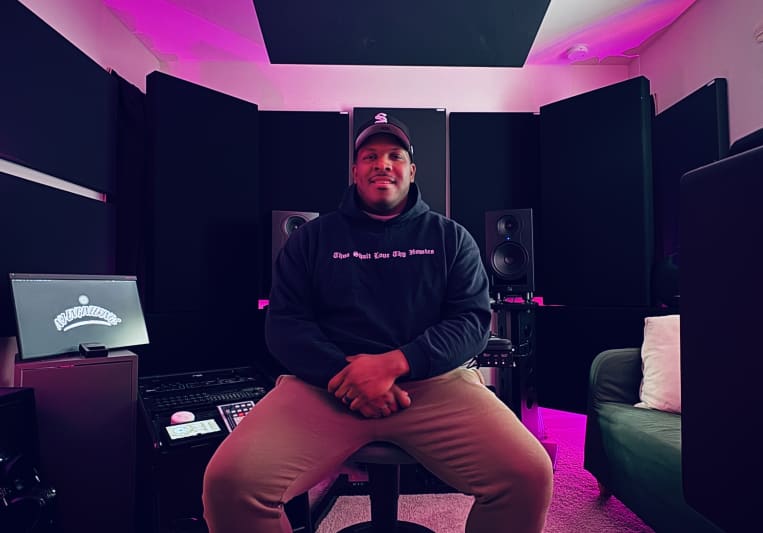
A: I work out of a dedicated mixing environment in Atlanta, built for accuracy and translation. My monitoring setup includes Kali IN-8 V2 paired with a subwoofer, allowing me to hear both detail and low-end balance with precision. I also reference on Yamaha HS7 to ensure my mixes translate well across different systems. My main interface setup combines the Apogee Duet 3 for monitoring control and clarity, alongside the Universal Audio Apollo Twin Duo for high-quality conversion and access to UAD processing. The room is acoustically treated to provide a balanced listening environment, which is critical for making confident mix decisions. I primarily work in Pro Tools, using a combination of industry-standard plugins and modern processing tools to achieve a clean, competitive sound. Overall, my setup is designed to deliver mixes that are accurate, impactful, and ready to translate across streaming platforms, cars, and club systems.
Q: What other musicians or music production professionals inspire you?
A: I draw inspiration from a mix of engineers and producers who have shaped the sound of modern hip hop and R&B. Mix engineers like Jaycen Joshua and MixedByAli really inspire me with their clarity, punch, and ability to keep records both clean and emotional. I also look up to Manny Marroquin for his versatility and how he creates depth and movement in a mix. On the production side, I’m inspired by creatives like Noah “40” Shebib for his minimal, atmospheric approach, Timbaland for his innovation and rhythm, and The-Dream for his songwriting and vocal production style. I take elements from all of them—whether it’s clarity, space, or emotion—and apply it to my own work to help artists bring their vision to life in a way that feels current but still unique.
Q: Describe the most common type of work you do for your clients.
A: I primarily specialize in mixing for hip hop, R&B, and pop artists. Most of my work involves taking raw or partially completed sessions and turning them into polished, release-ready records. I focus heavily on vocal production—cleaning, tuning, and shaping vocals so they sit clearly and emotionally in the track—while also enhancing the instrumental for balance, depth, and impact. My goal is always to deliver a mix that translates well across all platforms and feels competitive with today’s commercial releases. I also offer Dolby Atmos mixing for clients looking for a more immersive listening experience.

I was the Mixing & Mastering Engineer in this production
- Mixing EngineerAverage price - $250 per song
- Dolby Atmos & Immersive AudioAverage price - $300 per song
- Mastering EngineerAverage price - $50 per song
Turnaround 3–5 days. Includes 2 revisions. Final WAV delivered (stems on request). Payment upfront. No refunds after work begins. Projects may be used for portfolio unless agreed otherwise.
- Apogee Duet 3
- Antelope Orion
- Burl B2 Bomber
- SSL Fusion
- SSL Sigma
- Pro Tools
- UAD
- Waves
- FabFilter
- Slate
- Acustica
- Plugin Alliance
- Kali IN-8 V2
- Yamaha HS7
- Auratone Mixcube
- Audeze LCD-X
- DT 770 Pro

Limited-time offer: First-time clients get a discounted rate + 1 free revision. Let’s build your sound and create something professional and release-ready.