I help rock and indie artists get mixes that feel alive — emotional, dynamic and punchy, without losing the original raw energy and grit. Working across rock, indie, alt-pop and cinematic styles, I focus on clarity, depth and a modern sound that still feels human and organic.
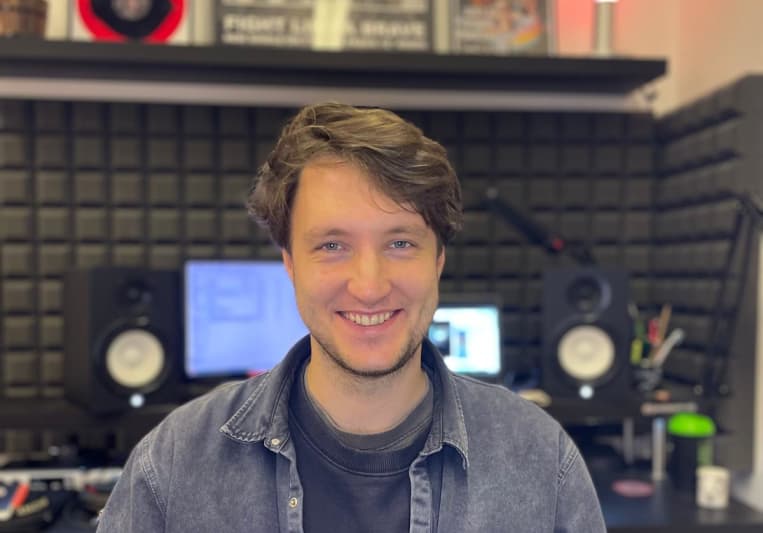
I'm a mixing engineer and multi-instrumentalist with a focus on rock, indie and alternative music. Over the years I’ve mixed songs for rock and indie bands, cinematic projects and my own artist releases. I’m obsessed with balancing guitars, bass and drums so they work together instead of just being next to each other, and I pay special attention to vocal presence and its emotional impact.
What you can expect:
• a clean and modern mix that translates well on headphones and speakers
• natural but powerful vocals
• detailed automation and musical dynamics
• fast communication and easy revision process
If you're looking for a mixer who understands rock/indie aesthetics but can also bring modern polish and depth, I’d love to hear your track.
Let’s make something you’re proud of.
Tell me about your project and how I can help, through the 'Contact' button above.
Languages
- English
Interview with Tomas Suchanek
Q: Analog or digital and why?
A: Both — but in practice, mostly digital. Digital workflows allow me to move faster and stay flexible. With a solid understanding of analog fundamentals, you can often achieve the same sonic results through technique and decision-making rather than hardware.
Q: If you were on a desert island and could take just 5 pieces of gear, what would they be?
A: I’d focus on making the most out of whichever five tools I had available, rather than relying on particular brands or models.
Q: What was your career path? How long have you been doing this?
A: I began exploring audio during high school, mainly through experimentation and practical experience. While my early work was largely intuitive, studying Audio Engineering gave me a strong technical foundation. The program itself was heavily focused on mathematics and physics rather than hands-on mixing, but it significantly shaped how I understand sound, signal flow, and critical listening. Over time, this perspective, combined with thousands of hours of practice, helped me develop a more refined and intentional approach. I’ve been working in mixing for ten years.
Q: How would you describe your style?
A: I’d describe my style as a balance between polished and raw. I aim for clarity, impact, and translation while preserving the character and natural energy of a performance.
Q: Can you share one music production tip?
A: Regular short breaks! Stepping away — even briefly — helps reset your perception and leads to far better decision-making than pushing through for hours. There are plenty of technical tricks in audio, but few are as consistently effective as maintaining a fresh perspective.
Q: What type of music do you usually work on?
A: Alternative rock and its related genres — indie rock, modern rock, metal, and stoner-leaning productions. Most of my projects sit somewhere within the guitar-driven spectrum, ranging from raw, organic recordings to more polished, contemporary mixes.
Q: What do you bring to a song?
A: Above all, I bring energy and cohesion. I focus on the elements that carry the song — the emotional core, the groove, the dynamics — and shape them so everything works together naturally. My approach is less about imposing a sonic template and more about enhancing what already makes the track compelling, helping it feel alive, balanced, and engaging.
Q: What's your typical work process?
A: My workflow starts with a fresh perspective — proper rest and a clear head are essential for making good decisions. I begin by reviewing the stems, setting up routing, preparing buses, FX chains, and establishing solid gain staging before building an initial raw mix. From there, I evaluate the production more critically, identifying anything that may benefit from additional refinement, such as timing relationships between instruments, vocal phrasing, or tuning. When deeper edits are needed, I communicate directly with the client to align on the best approach. My goal isn’t clinical perfection, but a result that serves the artistic vision and feel of the record we’re creating together.
Q: What other musicians or music production professionals inspire you?
A: I grew up listening to artists like Rage Against the Machine, Red Hot Chili Peppers, Pearl Jam, and Nine Inch Nails — the records that shaped my sense of energy, texture, and dynamics. Early in my mixing journey, I closely followed engineers such as Chris Lorde-Alge, Andy Wallace, and Steve Albini, absorbing whatever insights I could from interviews and studio clips. Over time, I realized that while learning from greats is invaluable, developing your own perspective is essential. Today, I’m focused on bringing a distinct sonic identity and musical sensitivity to every mix I work on.
Q: Describe the most common type of work you do for your clients.
A: I primarily work on mixing and mastering. Many of my clients also return for vocal editing and additional vocal production. I’ve spent countless hours recording vocals alongside a long-time vocal coach, which has given me a strong sense for performance, phrasing, and detail. My experience directing voice overs for narrative-driven games like Kingdom Come: Deliverance, Mafia, and Last Train Home further refined my ability to work closely with vocalists — understanding their artistic vision while guiding them toward their strongest possible performance.
- Mixing EngineerAverage price - $200 per song
- Mastering EngineerAverage price - $50 per song
- Electric GuitarContact for pricing
- EditingContact for pricing
- SSL Bus Comp
- SSL Fusion