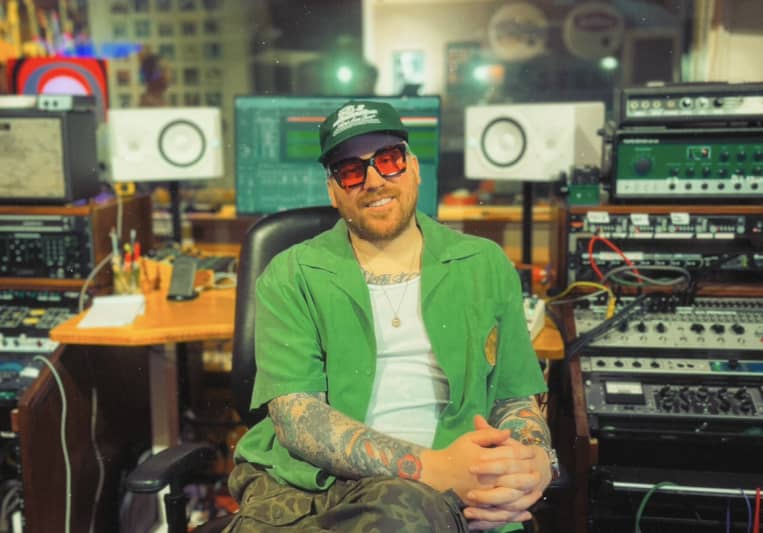
I produce, engineer, mix, and play guitar on rock, indie, psych, folk, classical, and everything in between. Big guitars, tape grit, space, and a rhythm section that moves. From building out a demo to mixing a finished production, I help artists make records with character.
Hey, I’m Shawn. I’m a producer, engineer, mixer, and multi-instrumentalist based in Austin.
I love getting into the details that make a record feel like itself: the arrangement, the guitar sound, the way the drums sit, the space around a vocal. My work lives mostly in indie, psych, alternative, and folk-rock, with room for ambient textures and electronic sounds.
I can help build out a demo, develop an arrangement, record parts, or mix a production you’ve already made. My credits include Red Letter Tribe, Winkler Mill, Jack Greenwood, and my own project, Shoreline Gold.
My studio combines Pro Tools with analog gear, tape delays, vintage guitars and amps, synths, and a lot of pedals. I love reamping tracks through that setup to find sounds you wouldn’t get by reaching for the same plugin. The point is always what works for your song.
I’m available for production, mixing, remote guitar recording and reamping, and local engineering in Austin. Send me a demo or rough mix, a couple of reference records, and what you need help with. Let’s make something together.
Send me an email through 'Contact' button above and I'll get back to you asap.
Languages
- English
Endorse Shawn Tallet5 Reviews

I’ve worked with Shawn on a number of projects throughout the past few years and quality + attention to detail are always at the heart of his work. He doesn’t settle for decent or good enough, which is the kind of person you want to have on your team when it comes to your art.
He is a very knowledgeable and talented musician, engineer, and producer who is never short on ideas to enhance a project. His patience helps keep a relaxed environment in the studio as well!
10/10 would recommend
Our band, Winkler Mill, has recorded three separate tracks with Shawn. He has been instrumental in helping us shape the sound and structure of each. Shawn is not afraid to tell a performer when a take could be better or when a part needs more/less. He’s also confident in assessing a song to determine what might be missing from, or need to be removed, for it to be the best version possible.
I have the roughly enjoyed recording with Shawn and would recommend him to any looking to bring their vision to fruition.
I’ve cut three tracks with Shawn and I can't recommend him enough. He is meticulous about getting the right sound and never settles for “close enough." He builds an environment where artists feel comfortable and creative.
Across our three tracks, Shawn has worn every hat: guitarist, producer, engineer, and mixer. He was truly a collaborator in the process and generous with his creativity.
He also has an incredible amount of gear and access to whatever tone you're chasing.

Shawn is a thoughtful, talented, and innovative producer. He has a beautiful and well appointed studio, and is great to work with.
Shawn is a thoughtful, talented, and innovative producer. He has a beautiful and well appointed studio, and is great to work with.
Interview with Shawn Tallet
Q: Tell us about a project you worked on you are especially proud of and why. What was your role?
A: “Forgotten Song” by Shoreline Gold, my own project. I worked on the writing, performance, production, recording, and mix. It brings the different parts of what I do together in one recording, from the song and performances through to the finished mix.
Q: What are you working on at the moment?
A: Shoreline Gold and a forthcoming Ars Scuzza record.
Q: What's your 'promise' to your clients?
A: I’ll listen carefully, give you honest feedback, and put the song first. I want you to understand what we’re doing and feel comfortable telling me when something isn’t right.
Q: Is there anyone on SoundBetter you know and would recommend to your clients?
A: Michael Grubbs — incredible producer, composer, and a dear friend.
Q: Analog or digital and why?
A: BOTH! 2026 is a pretty amazing time to work in music — digital has come so far, especially in mixdown. I love mixing analog on desks, but the lack of recall can be tough. But analog on the way in? It's magic. The trick is to know when to use each.
Q: What do you like most about your job?
A: Helping artists hear their music become what they hoped it could be. That moment when a mix clicks emotionally is unbeatable.
Q: What questions do customers most commonly ask you? What's your answer?
A: Q: "Whoa — how'd you get that sound?!" A: "Magic :)" (and then proceed to tell them exactly how, iso the stem, etc.)
Q: What's the biggest misconception about what you do?
A: That a great mix (or song, for that matter!) follows a step-by-step format — like, "first you EQ, then compress, EQ again, and voila..!" In my years of experience, I've found that no two mixes have ever been even remotely the same — even with the same artists! We are capturing imprints of time that are built to last here; every decision must be intentionally made in service of the song.
Q: What questions do you ask prospective clients?
A: What do you want listeners to feel during this song? What records or artists feel sonically close to your vision? What are you most unsure about in the composition right now?
Q: What advice do you have for a customer looking to hire a provider like you?
A: Look for someone who understands not just your genre, but your intent, your purpose, and your vision. The best mixes come from shared vision and communication, not just technical skill.
Q: If you were on a desert island and could take just 5 pieces of gear, what would they be?
A: Oh, that's a tough one. Probably a laptop with Pro Tools, Fender Strat, API 312 preamp, Roland Space Echo, and a Juno-106.
Q: What was your career path? How long have you been doing this?
A: I’ve been playing music and recording for over 15 years. I started with home recordings and bands, then built a hybrid studio and began working with other artists as a producer, mixer, and guitarist. Being a musician shapes how I hear arrangement, tone, and dynamics.
Q: How would you describe your style?
A: Cinematic, textural, warm, and emotionally driven — modern mixes with depth and character that still feel human.
Q: Which artist would you like to work with and why?
A: The War on Drugs. Their music balances atmosphere, groove, and emotional weight in a way I deeply connect with, and that kind of layered, cinematic sound is exactly where I do my best work.
Q: Can you share one music production tip?
A: If everything sounds big, nothing sounds big. Leave contrast and space in your arrangement so the emotional moments actually hit. Don't forget the emotional job of the composition — and the payoff.
Q: What type of music do you usually work on?
A: Indie rock, psychedelic, alternative, art pop, dream pop, electronic-leaning rock, and genre-blending projects. Anything where vibe, tone, and sonic identity are central.
Q: What's your strongest skill?
A: Creating width, depth, and atmosphere while keeping the core of the song punchy and focused. I’m particularly strong at balancing dense, layered productions so they feel expansive instead of cluttered — as well as knowing what tool to reach for and when.
Q: What do you bring to a song?
A: I’m a musician first. I pay attention to how the parts fit together, what carries the song, and where a sound or arrangement change could make it land harder. I’m especially drawn to guitar textures, space, and the balance between a strong groove and atmosphere.
Q: What's your typical work process?
A: First I listen to your demo or rough mix and we talk about what you want from the record. We agree on what you need help with, the timeline, and the quote. From there, I work on the arrangement, parts, or mix, depending on the project. I want to know what’s working for you and what still needs attention as we go.
Q: Tell us about your studio setup.
A: I run a hybrid analog/digital studio built around Pro Tools with high-end outboard gear and real instruments. My setup includes API and 1073 preamps, hardware compression (Distressor, Purple MC77, DBX 160s), classic modulation and delay units, tape-style processing, and a collection of vintage amps, guitars, synths, and drum machines. I use analog color intentionally — not as a gimmick, but as a way to add depth, movement, and character that plugins alone don’t always capture.
Q: What other musicians or music production professionals inspire you?
A: I’m inspired by producers and artists who treat records like worlds you can step into — Kevin Parker, Adam Granduciel, Tchad Blake, Brian Eno, and Shawn Everett are big ones. I also draw inspiration from engineers who blend technical excellence with emotional instinct — people who know when to be precise and when to let something feel human and imperfect.
Q: Describe the most common type of work you do for your clients.
A: Production, mixing, and guitar for indie, psych, alternative, and folk-rock artists. That can mean helping shape an arrangement, recording parts, or taking a finished session through the mix.
I was the Producer, engineer, mixer, guitarist in this production
- play_arrow"Savannah" by Red Letter Tribe
- ProducerContact for pricing
- Mixing EngineerAverage price - $250 per song
- Electric GuitarAverage price - $100 per song
- Full instrumental productionContact for pricing
- EditingAverage price - $75 per track
- Post EditingAverage price - $200 per track
- Vocal compingAverage price - $50 per track
- Tame Impala
- Boards of Canada
- The War On Drugs
- Neumann TLM67
- API 3124V
- Purple MC77
- Barefoot BF03 pair
- Echo Fix EFX2
- 1973 Gibson Les Paul Custom
- Hiwatt Custom 20
- UAD Apollo interface network
- Pro Tools 2025.6
