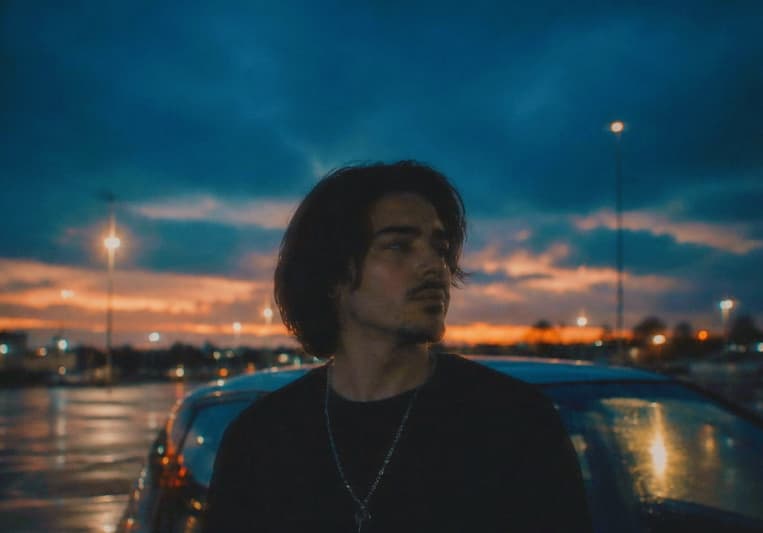
I'm a music producer, beat maker, and mixing & mastering engineer. From creating original beats and productions to vocal editing, mixing, and mastering, I help artists achieve a polished, release-ready sound while preserving their unique artistic identity.
I'm a music producer and audio engineer specializing in music production, vocal editing, mixing, and mastering.
As both a producer and an artist, I understand how important it is for a song to feel personal and authentic. My goal is to bring out the best in your music while preserving the sound and identity that make it yours.
Whether you're working on your first release or developing your next project, I'll help you turn your ideas into a polished, release-ready production.
I work across Pop, Indie, Hip-Hop, Trap, R&B, and Afro-inspired music, always adapting my approach to the needs of each song.
Would love to hear from you. Click the contact button above to get in touch.
Languages
- English
- Spanish
Interview with YM Beatz
Q: Analog or digital and why?
A: I love the character and warmth of analog gear, but I also appreciate the flexibility and precision of working digitally. Personally, I lean toward digital because it gives me the freedom to experiment, make changes quickly, and work efficiently without sacrificing creativity. I don't think one is automatically better than the other. What matters is the result, not whether it came from a piece of analog hardware or a plugin.
Q: What's your 'promise' to your clients?
A: My promise is to treat your music with the same care and attention I'd give my own. I'll listen to your ideas, communicate openly, and do my best to bring your vision to life. I want you to feel comfortable sharing feedback throughout the process. At the end of the day, it's your music, and my job is to help you make it the best it can be.
Q: What do you like most about your job?
A: My favorite part is hearing a song come together. I love that moment when all the little pieces finally start making sense and something that began as a simple idea turns into a finished track. I also really enjoy the creative freedom that comes with producing music. There's always a new sound to try, a different approach to explore, or something unexpected that ends up making the song better. I don't think I'll ever get tired of that feeling.
Q: What questions do customers most commonly ask you? What's your answer?
A: One question that often comes up when discussing a project is, "Can you make my song sound professional even if I recorded it at home?" My answer is that a great result doesn't necessarily require an expensive recording studio. A well-recorded performance in a home studio can absolutely sound great. Of course, the quality of the original recordings matters, and mixing can't fix every problem. But with good source material and the right approach, you can achieve a polished, release-ready sound.
Q: What's the biggest misconception about what you do?
A: I think one of the biggest misconceptions is that mixing and mastering are just about making a song louder or throwing a bunch of expensive plugins on it. There's a lot more to it than that. It's about balance, depth, dynamics, and understanding what the song actually needs. Sometimes the best decision is to do less, not more. Having the right tools is great, but knowing when and how to use them is what really makes a difference.
Q: What questions do you ask prospective clients?
A: I usually start by asking what they have in mind for the song. What kind of sound are they going for? Do they have any reference tracks? Is there something specific they want to improve? I also like to know what stage the project is at, what files they have available, and whether they have a deadline. The more I understand what they're looking for, the better I can approach the project and make sure we're on the same page from the beginning.
Q: What advice do you have for a customer looking to hire a provider like you?
A: My advice would be to find someone who understands what you're trying to create, not just someone who knows how to use the equipment. Listen to their work, communicate what you're looking for, and don't be afraid to share reference tracks. The more clearly you explain your vision, the easier it is to get the result you want. And remember, a good mix isn't necessarily the loudest or the most heavily processed one. It's the one that makes your song feel the way you intended.
Q: If you were on a desert island and could take just 5 pieces of gear, what would they be?
A: Assuming I somehow have electricity and a working computer on this island, haha, I'd bring my Apollo Solo, Slate VSX headphones, JZ BlackHole BH-2 microphone, my Jazzmaster guitar, and a MIDI keyboard. That would give me pretty much everything I need to keep writing, recording, producing, and mixing music. Although I'd probably miss having a proper studio desk!
Q: What was your career path? How long have you been doing this?
A: I started out making music for myself. I've always been interested in songwriting and production, and over time I became just as fascinated with the technical side of recording, mixing, and mastering. What began as a creative hobby gradually turned into something I wanted to pursue professionally. I spent a lot of time learning, experimenting, and developing my own workflow. Now I'm focused on growing YM Beatz, working with other artists, and continuing to improve both as a producer and an audio engineer.
Q: How would you describe your style?
A: I'd describe my style as a mix of modern, clean production with a creative and sometimes experimental approach. I love big, polished sounds, but I also appreciate warmth, texture, and those little imperfections that give music character. When I'm mixing someone else's song, though, I don't try to force my own style onto it. I want to understand what makes that artist unique and build around that.
Q: Which artist would you like to work with and why?
A: I'd love to work with Kevin Parker from Tame Impala. The way he approaches music production is fascinating to me. He has this ability to make something sound experimental and familiar at the same time. I really admire how much personality he puts into his productions, from the drum sounds to the synths and all those little details you might not even notice on the first listen. I think being part of that creative process would be an incredible experience.
Q: Can you share one music production tip?
A: Don't try to fix everything with plugins. A good arrangement and the right sounds will make your mixing process so much easier. Sometimes, instead of adding another EQ or compressor, all you need to do is change an instrument, adjust a part, or remove something that doesn't need to be there. I've learned that knowing what to leave out can be just as important as knowing what to add.
Q: What type of music do you usually work on?
A: I work with different genres, but Pop, Indie, Hip-Hop, and Trap are probably where I spend most of my time. I also enjoy producing R&B and Afrobeat-inspired music. I don't really like limiting myself to one style. Some days I'm working on something with live instruments and a more organic feel, and other days I'm experimenting with synths, heavy drums, and electronic textures. That's one of my favorite things about making music. There's always something new to explore.
Q: What's your strongest skill?
A: I'd say my strongest skill is mixing. I really enjoy taking all the different elements of a song and bringing them together into something that feels balanced, clear, and full of life. I pay a lot of attention to the little details, but I also try to keep the bigger picture in mind. A great mix isn't just about making everything sound clean or loud. It's about creating depth, energy, and emotion while letting each element have its own space. Being a music producer also helps me approach mixing from a creative perspective, not just a technical one.
Q: What do you bring to a song?
A: I think I bring a combination of creativity and attention to detail. Since I also write, produce, and release my own music, I tend to approach a song from both an artist's and an engineer's perspective. I care about the technical side, but I'm just as interested in how a song makes someone feel. Sometimes that means adding something creative, and other times it means knowing when to leave things alone. My goal is always to make the song better without losing what made it special in the first place.
Q: What's your typical work process?
A: I usually start by listening to the song and talking with the artist about what they're looking for. I like to understand the direction they have in mind before touching anything. For mixing, I focus on getting a solid balance first, then work on the details, processing, effects, and automation. If I'm producing a track from scratch, I spend more time exploring sounds, melodies, and arrangements until everything feels right. Once I have a first version ready, I send it over for feedback and make adjustments based on what the artist needs. I want the process to feel collaborative, not like I'm making all the decisions for them.
Q: Tell us about your studio setup.
A: I work from my home studio, where I handle everything from beat making and music production to vocal recording, mixing, and mastering. My setup includes a Universal Audio Apollo Solo interface, a JZ BlackHole BH-2 microphone, and Slate VSX headphones for monitoring. I mainly work in Cubase and FL Studio, using tools from UAD, FabFilter, Waves, and other developers. I've built my workflow around having the flexibility to experiment creatively while keeping the technical side of my productions consistent and reliable.
Q: What other musicians or music production professionals inspire you?
A: Kevin Parker from Tame Impala is definitely one of my biggest inspirations. I love how he approaches production, especially the way he blends organic instruments with synths and creates such a unique atmosphere. I'm also inspired by artists like Billie Eilish and Post Malone, who aren't afraid to experiment with different sounds and genres. On the engineering side, I really admire Chris Lord-Alge, Manny Marroquin, and Jaycen Joshua. I enjoy learning from the different ways they approach mixing and how they bring their own character to a record.
Q: Describe the most common type of work you do for your clients.
A: Most of my work revolves around mixing, mastering, and vocal production. I also create original beats and help artists develop their sound, whether they're starting from scratch or already have a song recorded. I spend a lot of time working on vocal tuning, editing, and getting everything to sit right in the mix. Every song is different, so I try to understand what the artist is going for before making any creative decisions. Sometimes a track needs more energy, sometimes it just needs a few subtle adjustments to bring everything together.
I was the Music Producer | Beat Maker | Mixing & Mastering Engineer in this production
- play_arrowYMZ – Enough for You
- Mixing EngineerAverage price - $50 per song
- Mastering EngineerAverage price - $30 per song
- Beat MakerAverage price - $50 per song
- Vocal TuningAverage price - $40 per track
- Vocal compingAverage price - $40 per track
- Time alignment - QuantizingAverage price - $40 per track
Mixing & mastering includes up to 5 revisions. Standard turnaround is 3–5 days. Rush delivery available upon request. Additional revisions, versions, and stems may incur extra fees.
- Apollo Solo (UAD)
- Slate VSX
- FL Studio
- Cubase
- FabFilter
- iZotope
- UAD
- Waves etc...
