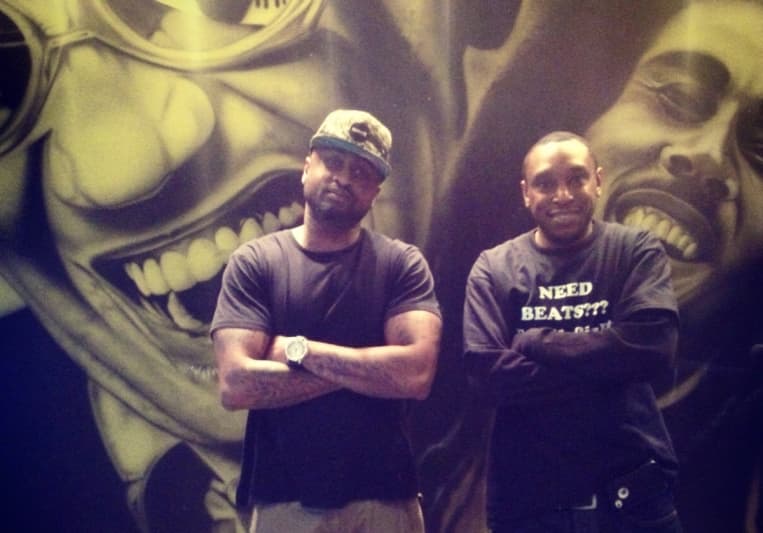
Hey my name is Bryan Lamarr and I'm a Audio and Broadcasting engineer. I have, done engineering work for independent, as well as signed artist. I pride myself in being a perfectionist. I make sure that I maintain my clients visions with a professional outcome. Will send my work per request.
Bryan Lamarr is a veteran Mixing & Mastering Engineer with over 25 years of experience. Based in Raleigh, NC, he serves as VP of Operations and Head Engineer at Family Biz Ent, an independent music company focused on artist development, production and distribution.
He has engineered projects across multiple genres including Hip-Hop, R&B, Gospel and Pop. Some of the artists he has worked with are Chaundon, Chris Brown, Joell Ortiz, Little Brother, Locksmith, Luther Vandross, Nottz and Rapper Big Pooh. With a trained ear and unmatched attention to detail, he consistently delivers a professional, platform-ready sound.
As VP, Bryan leads business strategy, project execution and quality control. He’s certified in Pro Tools, Waves Audio, Dolby Atmos and more. He takes pride in staying current with the latest technology. His expertise and passion are driving forces behind Family Biz Ent’s sound and growth within the music industry.
Click the 'Contact' above to get in touch. Looking forward to hearing from you.
Credits
Interview with Bryan Lamarr
Q: Tell us about a project you worked on you are especially proud of and why. What was your role?
A: The Luvaboy TJ feat. Chris Brown "Jumping Out The Plane" and Rapper Big Pooh "To Dream In Color" It shows how far my mixing and mastering has came along.
Q: What are you working on at the moment?
A: Mixing and Mastering Joell Ortiz album
Q: Is there anyone on SoundBetter you know and would recommend to your clients?
A: N/A
Q: Analog or digital and why?
A: In mixing and mastering, the debate between analog and digital isn’t about which is “better”—it’s about what each brings to the table. Most modern engineers use both, depending on the sound they want. Here’s a breakdown: 🎛️ Analog Gear What it is: Physical equipment: compressors, EQs, tape machines, preamps, consoles. Examples: vintage Neve 1073, SSL 4000 series, analog tape machines. Why engineers use it: Warmth and character: Adds subtle harmonic distortion and saturation that feels “musical.” Glue: Compressors and EQs can make instruments or a mix feel cohesive. Hands-on control: Physical knobs and faders can inspire creative decisions. Limitations: Expensive and bulky Less precise than digital Maintenance-intensive 💻 Digital Gear What it is: Software plugins and DAWs like Pro Tools, Logic Pro, and plugins like FabFilter. Why engineers use it: Precision: Exact EQ cuts, automation, and recallable settings. Flexibility: Unlimited tracks, plugins, and instant A/B comparisons. Cost-effective: More accessible, portable, and easy to update. Limitations: Can sound “sterile” if not handled carefully Overprocessing can make mixes feel lifeless 🔄 Why using both is powerful Many professionals adopt a hybrid workflow: Track recording & summing through analog gear → warmth, color, and vibe. Mixing in the DAW → precision, automation, and flexibility. Optional analog processing during mastering → subtle glue and character. The key isn’t “analog vs digital”—it’s knowing when each serves the music. 🎯 In simple terms: Analog = soul and warmth Digital = precision and flexibility Together = the best of both worlds
Q: What's your 'promise' to your clients?
A: A strong “promise” from a mixing and mastering engineer isn’t about hype—it’s about clarity, trust, and results. If I had to sum it up, it would be this: 🎯 The core promise I will make your song sound as good as it possibly can—without losing what makes it yours. 🎧 What that actually means 🔊 1. Your vision comes first I’m not here to impose a style—I’m here to enhance yours Reference tracks (even from artists like The Weeknd or Billie Eilish) guide direction, not copy it 🎛️ 2. Professional, release-ready sound Clean, balanced mix Controlled dynamics Mastering that translates across all systems Using tools like iZotope Ozone or FabFilter is part of the process—but the goal is always the result, not the tools. 🤝 3. Clear and honest communication I’ll tell you what’s working—and what isn’t I won’t overpromise or “yes” everything if it hurts the track You’ll always know where things stand 🔄 4. Collaboration, not ego Your feedback matters Revisions are part of getting it right The end goal is a track you’re genuinely proud of ⏱️ 5. Reliability Deliver on time Stay organized Respect your deadlines and release plans 🧠 What I won’t promise I won’t promise to “fix anything” if the source is flawed I won’t promise your song will sound identical to a chart hit I won’t rush something just to finish faster 👉 Those are usually red flags if an engineer does promise them. 🎯 In simple terms: You bring the song—I’ll bring out its full potential, honestly and professionally.
Q: What do you like most about your job?
A: What stands out most about this kind of work is the moment when a track clicks emotionally—when everything suddenly feels right.
Q: What questions do customers most commonly ask you? What's your answer?
A: 🎧 1. “Can you fix this in the mix?” Answer: “I can improve it, but not completely fix it if the recording or performance has issues.” 👉 Good engineers are honest here. For example: Slight pitch issues → fixable Background noise → reducible Bad mic quality or clipping → limited options 🔊 2. “How loud will my song be?” Answer: “I’ll make it competitively loud while keeping it clean and dynamic.” Often done with tools like iZotope Ozone, but the key is: No distortion No crushed dynamics Streaming-friendly levels 🎛️ 3. “What do you need from me to get started?” Answer: “Clean, organized stems with headroom—and a reference track if you have one.” Typical requirements: WAV files (not MP3s) No clipping Around -6 dB headroom Clearly labeled tracks ⏱️ 4. “How long will it take?” Answer: “Usually a few days for mixing, plus time for revisions.” Varies based on: Track complexity Number of revisions Engineer’s workload 🔄 5. “How many revisions do I get?” Answer: “Typically 2–3 revisions included, but I’ll work with you to get it right.” 👉 This is about setting expectations—not limiting quality. 💰 6. “Why does mixing/mastering cost so much?” Answer: “You’re paying for experience, ears, and decision-making—not just time.” Also includes: Years of skill development Studio setup Attention to detail 🎧 7. “Can you make it sound like [artist/song]?” Answer: “I can use that as a reference, but your track will still sound like you.” Engineers often study mixes from artists like Drake or Taylor Swift, but: Copying exactly isn’t the goal Matching vibe and quality is 🧠 8. “Do I really need mastering?” Answer: “Yes—mastering ensures your track translates well everywhere and meets release standards.” Even a great mix benefits from: Final polish Loudness optimization Consistency 🎯 9. “Will this sound good on Spotify/Apple Music?” Answer: “Yes—I’ll master it to meet streaming platform standards.” That includes: Proper loudness levels No clipping after compression Format compatibility 🎚️ 10. “What makes you different from other engineers?” Answer: “I focus on understanding your vision and making the song feel right—not just technically correct.” 👉 This is where taste, communication, and experience matter most. 🎧 The pattern behind all these questions Most clients are really asking: “Will you make my song sound professional?” “Will you understand my vision?” “Can I trust you with my music?” 🎯 Bottom line A great engineer doesn’t just give technical answers—they: Set clear expectations Communicate honestly Focus on your song, not just the process
Q: What's the biggest misconception about what you do?
A: 🎧 Misconception #1: “You can fix anything in the mix” People often think: “We’ll just fix it in mixing or mastering.” Reality: If a vocal is poorly recorded, it can only be improved—not fully fixed Bad arrangement or clashing instruments can’t be magically solved with plugins Mastering (even with tools like iZotope Ozone) won’t rescue a weak mix 👉 A great final track starts with a great recording and production. 🔊 Misconception #2: “Mastering = just making it louder” Yes, loudness is part of it—but: It’s really about balance, translation, and consistency Making sure the song sounds good on phones, cars, headphones, and speakers Preserving dynamics while still being competitive 👉 Loud but distorted or flat = bad mastering. 🎛️ Misconception #3: “It’s all about expensive gear” People assume high-end gear = great sound. Reality: Tools like FabFilter or Waves are powerful—but widely available The difference comes from how they’re used, not just owning them 👉 Skill beats gear almost every time. ⏱️ Misconception #4: “It’s a quick final step” Clients sometimes expect: Fast turnaround with minimal input Instant perfection But in reality: Mixing is detailed, iterative work Small changes can take time to get right Revisions are a normal part of the process 🧠 The truth Mixing and mastering are less about “fixing” and more about: Enhancing emotion Translating the artist’s vision Making the song connect with listeners everywhere 🎯 In simple terms: It’s not about making a track louder—it’s about making it feel right.
Q: What questions do you ask prospective clients?
A: What is your entire vision!!
Q: What advice do you have for a customer looking to hire a provider like you?
A: Hiring a mixing and mastering engineer can make or break your final sound, so it’s worth being a bit picky. Here’s how to choose someone who will actually elevate your music—not just process it. 🎧 1. Listen to their past work (this is EVERYTHING) Don’t just read descriptions—listen critically: Are vocals clear and upfront? Does the mix feel balanced and professional? Do different songs sound consistent? If they’ve worked with artists similar to your style, that’s a big plus. 🎯 2. Match their style to your vision Not every engineer fits every genre: Some excel at punchy rock (like the style of Chris Lord-Alge) Others specialize in polished pop (like Serban Ghenea) 👉 You want someone who already naturally does what you’re aiming for. 💬 3. Communication matters more than you think A good engineer should: Ask about your vision and references Be open to feedback and revisions Explain changes in a way you understand If communication feels off early, it usually gets worse later. 🔄 4. Ask about revisions upfront Clarify: How many revisions are included What counts as a revision vs. a new request Turnaround time This avoids awkward surprises. 🎚️ 5. Don’t chase the cheapest option You don’t need the most expensive engineer—but super cheap can mean: Rushed work Generic presets Minimal attention to detail 👉 Think of it as an investment in your release. 🎵 6. Ask for a sample or test mix (if possible) Some engineers will mix a short section of your track: Lets you hear how they treat your sound Helps you compare multiple engineers 🧾 7. Get the technical details clear Make sure you know: File formats you’ll receive (WAV, MP3, stems) Delivery specs for platforms Whether mastering is included or separate Tools like iZotope Ozone are common, but the real question is how well they’re used. 🧠 8. Trust your ears—not just credits Big names and fancy gear don’t guarantee a good fit. If it sounds right to you, that’s what matters most. 🎯 Bottom line A great engineer should: Understand your vision Improve your sound without changing your identity Make the process smooth and collaborative
Q: If you were on a desert island and could take just 5 pieces of gear, what would they be?
A: My Laptop, Headphones, My interface, Destressor, CL 1B
Q: What was your career path? How long have you been doing this?
A: My career path is to keep growing, over 25 years Ive been in the engineering world
Q: Which artist would you like to work with and why?
A: Pharrell, Weekend, Nas,T.I.
Q: Can you share one music production tip?
A: Don't try to please others, always go with feeling, if it feels good it's right.
Q: What type of music do you usually work on?
A: Hip-Hop, Gospel, R&B, Trap.
Q: What's your strongest skill?
A: What that looks like in practice 🔍 Identifying problems fast Hearing muddiness and knowing it’s a buildup around ~200–400 Hz Noticing harsh vocals and targeting the exact frequency range Catching masking issues (like kick vs. bass fighting each other) 🎛️ Making precise adjustments Using tools like FabFilter EQs or iZotope Ozone: Cutting instead of boosting when needed Using compression just enough (not overdoing it) Placing elements in a way that feels natural and balanced 🧠 Seeing the “big picture” Keeping the emotion of the song intact Knowing what matters most (usually vocals or groove) Avoiding over-processing
Q: What do you bring to a song?
A: Balance levels so nothing is too loud or too quiet EQ (equalization): shape the tone of each sound Think of mixing like cooking—combining ingredients so they taste good together. Compression: control dynamics (loud vs. soft parts) Add effects: reverb, delay, chorus, etc. Stereo placement: decide what goes left, right, or center Clean up audio: remove noise, fix timing or pitch issues
Q: What's your typical work process?
A: Mixing Process (Step-by-Step) 1. 🎧 Session Prep & Organization Import and label all tracks (vocals, drums, instruments) Color-code and group similar elements Remove noise, clicks, and unwanted sounds Set initial gain levels (gain staging) 👉 A clean session saves hours later. 2. 🔊 Static Mix (No plugins yet) Adjust volume faders Pan elements left/right Get a rough balance using just levels 👉 If it sounds good here, everything else becomes easier. 3. 🎛️ Core Processing Using plugins (often from companies like FabFilter or Waves): EQ: carve space for each instrument Compression: control dynamics and add punch Saturation: add warmth or character De-essing: tame harsh vocals 4. 🌊 Space & Depth Add reverb and delay Create front-to-back depth Use automation to keep things dynamic 👉 This is where a mix starts to feel “alive.” 5. 🔄 Automation & Movement Adjust levels throughout the song Bring elements in/out for energy Emphasize key moments (chorus drops, vocal lines) 6. 🎧 Reference & Fine-Tuning Compare to professional tracks Check on headphones and different speakers Fix frequency clashes or harshness 🔊 Mastering Process 1. 🎯 Final Mix Check Ensure no clipping Leave headroom (usually around -6 dB) 2. 🎛️ Subtle Processing Often using tools like iZotope Ozone: Gentle EQ (overal 3. 🔊 Loudness & Limiting Increase volume to competitive levels Use a limiter to avoid distortion 4. 📦 Export & Format Prepare for streaming (Spotify, Apple Music) Create WAV/MP3 versions Ensure consistency across tracks (for albums) 🔁 Reality Check In practice, it’s not strictly linear: Engineers jump back and forth between steps Mixing decisions often affect mastering Revisions from artists are common 🧠 The mindset A strong workflow is about: Speed + efficiency (don’t overthink early) Critical listening (small details matter) Knowing when to stop (huge skill)
Q: Tell us about your studio setup.
A: At the center is a powerful computer running a DAW like: Pro Tools (industry standard for studios) Logic Pro (great for production + mixing) Plugins & Processing Tools Instead of (or alongside) hardware, most engineers rely on plugins: Waves bundles FabFilter (EQ, compression, limiting) iZotope Ozone for mastering Even with all this gear, the most important parts are: Your ears Your taste Your decision-making A great engineer can make a solid mix on a modest setup, while expensive gear alone won’t guarantee good results.
Q: What other musicians or music production professionals inspire you?
A: Legendary Mixing & Mastering Engineers Chris Lord-Alge – Known for punchy, radio-ready mixes (worked with Green Day, Muse). Serban Ghenea – Behind countless modern pop hits (Taylor Swift, The Weeknd). Bob Ludwig – A mastering legend with credits spanning decades (Led Zeppelin, Daft Punk). Manny Marroquin – Known for clean, modern mixes (Rihanna, Kanye West).
Q: Describe the most common type of work you do for your clients.
A: A Mixing and Mastering Engineer is responsible for turning raw recorded audio into a polished, professional-sounding final track. The role is usually split into two stages—mixing and mastering—though some engineers do both. A mixing engineer takes all the individual recorded tracks (vocals, drums, guitars, etc.) and blends them into a cohesive song.

I was the Mix & Mastering Engineer in this production
- Mixing EngineerContact for pricing
- Mastering EngineerContact for pricing
- Surround 5.1 MixingContact for pricing
- Dolby Atmos & Immersive AudioContact for pricing
Mixing & mastering with 2 revisions. Client provides stems and owns audio. Standard delivery 5–7 days, rush 2–3 days extra. 50% deposit, balance on delivery. Files kept private.
- UAD Apollo
- Protools
- Logic
- Stream-deck
- MPC X
- Avantone
- Slate Digital Raven MTI2
- an array of plugins.

50% discount for all first time clients