I've been working in this field for two decades, and I'm confident I can help with all your audio needs.
I perform any edits and corrections digitally, before passing everything through my analog console and outboard compressors, in order to give each track that three-dimensional feel before finalizing with time-based effects like reverb and delay within my DAW. My style tends toward a warm and more rounded tone with modern sheen and clarity, but I'm always happy to adjust this in meeting my clients' needs and furnishing their creative vision.
I've recorded and mixed rock albums, classical music, and various other styles. I've helped with podcast production and sound for videos. I love what I do, and my primary goal is to turn what can sometimes be a frustrating science into an enjoyable artform for my clients.
I don't publish a portfolio because the audio I work on belongs to the client, and I believe each project is unique. I'm happy to offer a sample edit of your material upon request.
Would love to hear from you. Click the contact button above to get in touch.
Interview with Cooley Audio
Q: Tell us about a project you worked on you are especially proud of and why. What was your role?
A: I'm most proud of an album titled "Lost Media" that I wrote and recorded with my band, Social Void. It took 4 years to complete, due to a variety of immense life changes for everyone involved during the course of its development. It was a true labor of love, but now that it's out, I can definitively say that it is my personal favorite work of music I've ever created.
Q: What are you working on at the moment?
A: I'm working on an acoustic project for a female singer-songwriter, an EP for an alternative rock band, isolated tracking for a bassist in a metal band, weekly broadcast audio for a few churches, and various other items that come across my desk throughout the week.
Q: Is there anyone on SoundBetter you know and would recommend to your clients?
A: I'm new to this community, but I'll update if I become familiar with someone.
Q: Analog or digital and why?
A: For me personally, I require both analog and digital to meet the nature of my workflow, learned from live engineering when I was young and all the muscle memory that entails, along with the benefits and competitive advantages of digital, with its corrective tools and time-based effect manipulation. I use a variety of measuring tools on each, as well.
Q: What's your 'promise' to your clients?
A: I'm in it with you until you're happy with the work, and while I have an extensive background in this field, I realize there will always be something I haven't encountered. I promise to work diligently to facilitate your needs, and to solve any issue that pops up. As long as we have clearly defined goals for the mix and honest communication, I will measure my success by achieving that for you.
Q: What do you like most about your job?
A: I like all aspects of building and completing a mix: creating a plan, prepping the tracks, the problem-solving, and checking exports, but if I had to pick my favorite moment in the process, it's when an artist hears it all come together for the first time. Having made music, myself, I know the sense of excitement and relief that comes when you move from the creation phase to the enjoyment phase.
Q: What questions do customers most commonly ask you? What's your answer?
A: The most common question I get revolves around if I'm willing to try something different with a mix. The answer is always YES. I'll be honest and polite if I have doubts about an idea, but my job is to make clients happy with the end result. So, I never have a problem doing something differently to see if it improves the way someone feels about my work.
Q: What's the biggest misconception about what you do?
A: While mixing can fix and correct technical issues and problems, it cannot make you love something you already dislike. If you're unhappy with a performance, no amount of production will be able to make you enjoy it. The lack of knowledge about this field has led some people to pass projects down the pipe hoping they'll become something they're not, and that can be an expensive mistake.
Q: What questions do you ask prospective clients?
A: Do you have references or influences you'd like me to consider when mixing? Are there any mixes or tones you dislike so I can avoid going in the wrong direction? What are your goals for this project? Do you have your tracks labelled and organized already? What format will you need this in?
Q: What advice do you have for a customer looking to hire a provider like you?
A: Put a higher premium on "fit" than you do on pedigree. I've heard incredible mixes from brand new engineers because they found the right project, and I've heard seasoned engineers miss the mark at times. If you're able to test this with a smaller sample size, I'd encourage that before you commit a lot of money and material to someone.
Q: If you were on a desert island and could take just 5 pieces of gear, what would they be?
A: My laptop, a generator, a pair of Audio Technica M50s, an acoustic guitar, and a Shure KSM44.
Q: What was your career path? How long have you been doing this?
A: I began when I was 9, helping mix live sound for a large church, both at Sunday morning services and at heavily attended events throughout the year. During high school, I was trained by a music shop owner and equipment installer, and since graduating, I began recording music independently for myself and other artists and installing and calibrating equipment for churches and companies throughout my home state of SC. During that time, I was contracted by a local orchestra to record their weekly practices and seasonal performances, and I began building a fully equipped studio setup and expanding my client roster. Eight years later, when COVID-19 shut everything down, I started working with podcasts and doing online freelancing. Since that time, I've rewired my studio to incorporate a blend of hardware I'm familiar with and plug-ins that expedite my workflow, and I have gained a long list of musicians and other engineers who trust my expertise and come to me for work or assistance. It's been a dream job for me the past two decades and a fascinating field of study since I was a kid.
Q: How would you describe your style?
A: My style is probably of blend of several different eras of production. I like the character and broad-strokes shaping offered by older, analog hardware (not just the famous, super-expensive stuff) because I originally learned on live audio equipment as a young kid, and I love the conveniences of modern-day mixing, offered by various plug-in companies. Often, my mixes have a warmth and a depth that makes them easily identifiable, and being a musician myself, I tend to "play" the equipment as I mix.
Q: Which artist would you like to work with and why?
A: I would love to have recorded alongside Steve Albini to witness some of that creativity firsthand, but as far as musical artists, I would really enjoy working on a Daniel Lanois album for the unique production ideas he brings to the table or something like Phantom Planet's "Devastator" for the variety of track needs.
Q: Can you share one music production tip?
A: Always have a reason behind what you do. It becomes incredibly difficult to make wise decisions if you build a mix or a channel effects chain on random or thoughtless moves. The fidelity of what you work on will be affected by every new element you introduce, and you should only spend that fidelity on processing or production pieces that get your track where you want it to go.
Q: What type of music do you usually work on?
A: Most recently, I've been mixing alternative rock, but I've had a good balance of genres and material come across my desk over the years, including classical, acoustic, pop, rap, funk, metal, punk, and hip-hop.
Q: What's your strongest skill?
A: My strongest skill is my willingness to take feedback and constructive criticism in order to grow. I've been doing this a long time, but each new artist offers me a unique perspective that can help shape the way I work. I enjoy this process, and I thrive on new challenges.
Q: What do you bring to a song?
A: I have a malleable quality that's based in my willingness to adapt to each new project, and I find it easy to be patient and communicate clearly with my clients in facilitating their needs. I really enjoy working on all forms of audio, and that enthusiasm keeps the entire process light and fun, as opposed to the frustration song-recording can feel like at times.
Q: What's your typical work process?
A: I begin with edits and corrections on the computer before passing tracks through an outboard console and a rack full of hand-selected compressors to get the general mix balanced and add the depth of hardware to each song. Then, I finish the mix in my DAW with time-based effects like reverb and delay before adding any final bus compression (if needed), and I check all my work on a few real-world listening systems prior to returning it to the client.
Q: Tell us about your studio setup.
A: I custom-built my desk, and I've carefully calibrated my room and monitor setup to give me accurate frequency representation and precise time-alignment so each mix will translate well, with minimal surprises. I incorporate a blend of hardware and software in order to have all the benefits of modern technology alongside all the character and practical decision-making of analog equipment.
Q: What other musicians or music production professionals inspire you?
A: I love the books "Mixing with Your Mind" by Michael Paul Stavrou and "Mixing Secrets of the Small Studio" by Mike Senior. I'm inspired by a wide range of artists and styles, but some of my favorite engineers include Nick Launay, Dave Pensado, Tom Lord-Alge, and Andy Wallace.
Q: Describe the most common type of work you do for your clients.
A: Most of the work I'm asked to do revolves around printing tracks on my outboard gear to add depth to them, and I frequently help sort out complicated and dense mixes for bands who have more than a few elements masking each other within a song. I've also performed a plethora of general edits and error corrections for podcasts in recent years.
- Mixing EngineerAverage price - $500 per song
- Mastering EngineerAverage price - $100 per song
- EditingAverage price - $100 per track
- Podcast Editing & MasteringContact for pricing
- Vocal TuningAverage price - $75 per track
- Production Sound MixerContact for pricing
- Sound DesignContact for pricing
Up to 5 Revisions. Most projects can be completed within 24-48hrs. More complicated projects may take up 7 business days.
- I have an analog console and a rack of outboard compressors for printing each mix
- and I've built a well-calibrated
- central desk that gives me accurate sound reproduction and dependable translation for my mixes.

- I just released an album with my band, Social Void!Jan 20, 2026
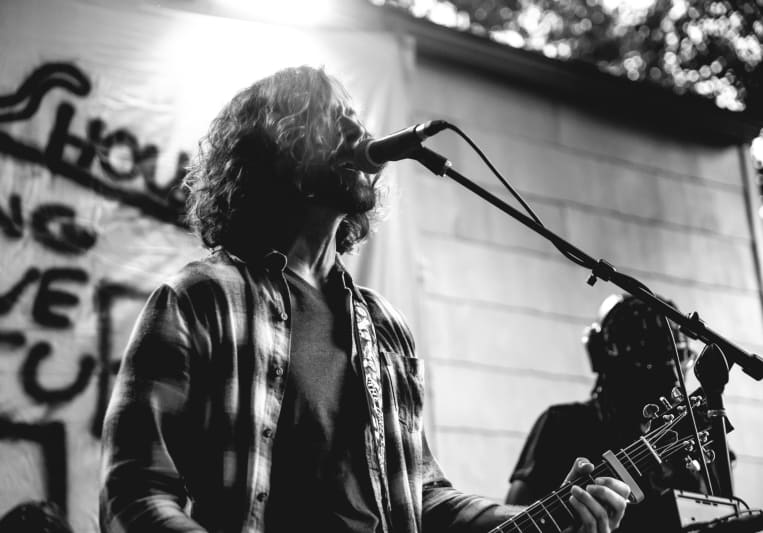
My band, Social Void is a cinematic alternative rock band based in Charleston, SC, and we just released an album titled "Lost Media."
I wrote, recorded and arranged the entire album with my bandmates, and I mixed it with my drummer assisting. If you feel like checking it out, the Spotify is linked below:
https://open.spotify.com/album/5eahtQWqkF3Uypcdror7lj